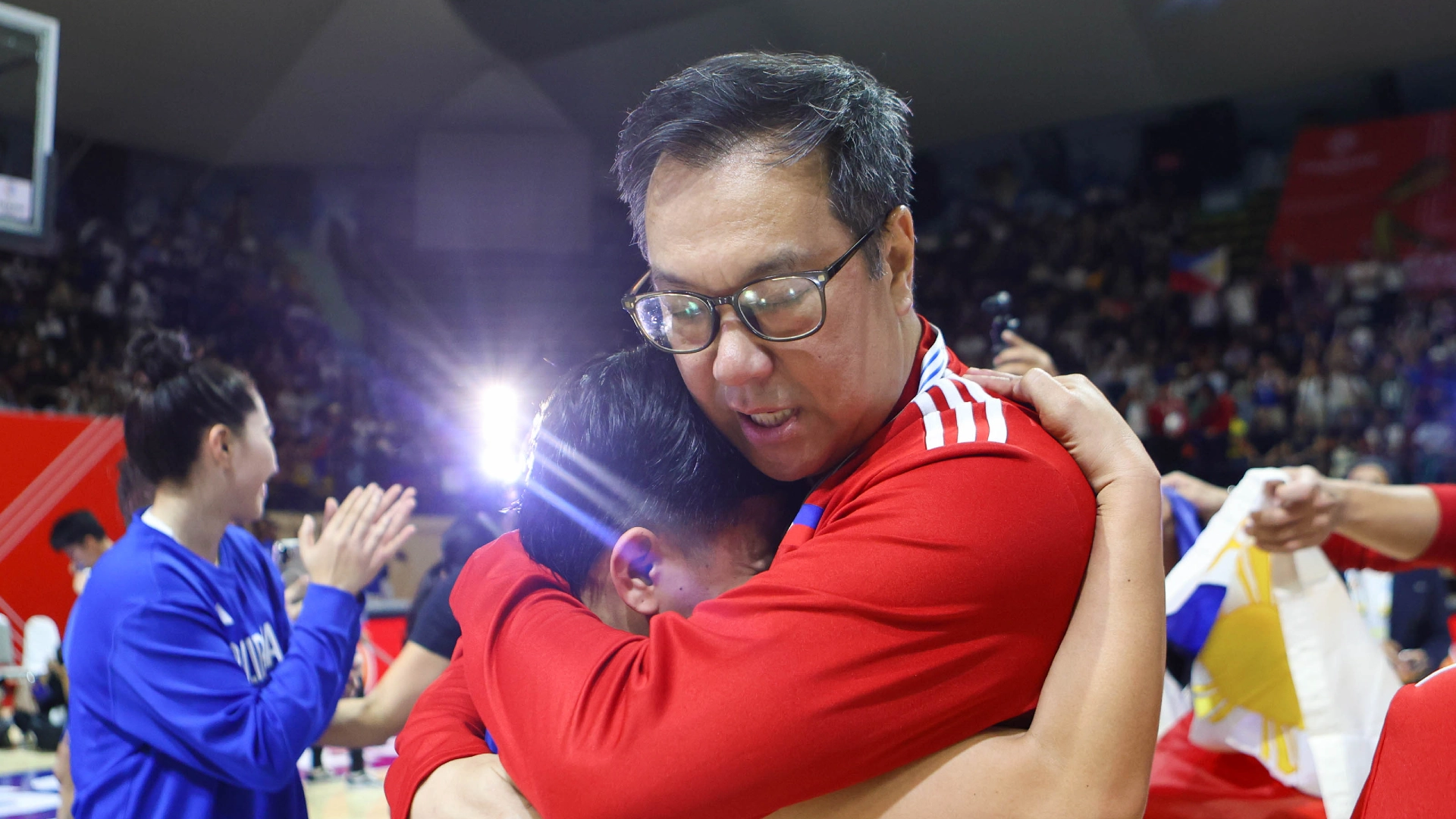
Pat Aquino brought Philippine women’s basketball to unprecedented heights. In the process, he also discovered a lot about himself as a coach and person.
Shortly after the Philippines stunned World No. 19 Colombia in their final game of the FIBA Women’s World Cup 2027 Qualifiers in Lyon, France, Gilas Women head coach Patrick Aquino faced the assembled media one last time.
The victory, although no-bearing since the team had already been eliminated, was historic nonetheless, being the first win by a Philippine women’s basketball team over a non-Asian opponent in an official FIBA tournament.
Aquino, by now already aware that his tenure as head coach might be coming to an end, waxed nostalgic when asked about the significance of the result.
“Reflecting on this journey, I’ve been with the Gilas program for a decade now,” Aquino told the media. “And seeing how we’ve grown, how we’ve become a team, and seeing them compete at this world-class level, it’s a journey we’ll cherish forever.”
“And winning a game outside Asia against a top-caliber team means a lot back home. It’s probably the next step for us: to build more players in the program so we can sustain and compete at this level.”
That “next step” will now have to be done by another head coach, as just two weeks after the epic win over Colombia, Aquino was informed by the Samahang Basketbol ng Pilipinas (SBP) that his services were no longer needed.
End of an era
The decision brought to an end the longest single tenure of a Philippine basketball coach with a national team. By the time he was served his walking papers, Aquino had been at the helm of the women’s national team for a staggering 11 years.
That’s a long time for anyone, in any industry, to be in charge. So it’s understandable if Pat Aquino still isn’t used to being called “ex-coach.”
“Siguro sabihin ko na lang, I feel disoriented sometimes,” he told The GAME in an exclusive interview. “But, moving on from what happened, there are other doors to be opened. And hopefully, I could open a good door for me for the next journey that I will partake.”
Aquino wasn’t exactly blindsided by the decision, given the movements within the federation and the fact that he had been coach since Kacey Dela Rosa was in grade school.
“I saw it coming,” he admitted. “I mean, well, I think the changes were made during the new leadership of SBP. I saw there were a lot of changes during that time. And I know naman that, being there for the longest time, maybe they had to take a look or at what’s happening. I was really sure na there’s gonna be movements.”
His gut feel turned out to be spot on, and thus came to a close one of the most successful runs of any national team coach. Looking back at his tenure, Aquino’s accomplishments on the national team level are filled with groundbreaking milestones.
Three Southeast Asian Games gold medals (and the very first for women’s 5×5 basketball). Promotion to Division A of the FIBA Women’s Asia Cup. A best-ever fifth place finish at the Asian Games.
By any measure, Pat Aquino set the gold standard. But who would have thought that this journey, this basketball odyssey, hardly resembled what Pat Aquino had planned to do with his career?
How it all began
In 1998, Pat Aquino was stuck in basketball limbo. He had had a fairly successful collegiate career with the UP Fighting Maroons and was playing in the Philippine Basketball League (PBL) for Ever Bilena.
But the PBL was increasingly looking like the final stop of his playing career. He simply wasn’t good enough to play in the PBA, and a tryout with a team in the newly-formed Metropolitan Basketball Association (MBA) didn’t end well. With his 30th birthday fast approaching, Aquino knew even his PBL days were coming to an end soon.
Around this time, the PBL decided to expand to women’s basketball and established the WPBL. Ever Bilena was one of the pioneering WPBL franchises, and Aquino was assigned by owner Silliman Sy to handle the team.
In a sign of things to come, Aquino’s first foray into coaching women’s basketball was a success.
“Sa akin, at that time, wala talagang plan,” he said. “Eventually, we were back-to-back champions. And then nawala. And then after ten years, nagkaroon ulit ng WPBL under Commissioner Chino (Trinidad). And then champion na naman.”
Silliman Sy’s brother Dioceldo took note of Aquino’s success with women’s teams, telling him that female players seemed to listen to him more than most. So together they handled the under-16 and under-18 national teams from 2009 to 2011.
Dioceldo then asked Aquino to help him with another personal project: the women’s team of National University in the UAAP.
Today, the NU Lady Bulldogs are the gold standard of women’s college basketball, and Pat Aquino himself has a lot to do with that. But when he took over, they were languishing at the bottom of the standings.
“Actually, to be frank, ayaw ko talagang pumunta sa NU at that time because it was a losing program,” he said. “Dioceldo tried to persuade me talaga na ‘Help me out.’ And when he said help him out, I tried talaga helping him out in a way na mabigay ko lahat ng kaya ko.”
Aquino will be the first to tell you it wasn’t easy. Not only was the program unattractive, women’s basketball itself wasn’t on the radar of most young girls.
“We had to go find recruits outside Metro Manila kasi walang pupunta sa NU,” he recalled. “We’re trying to build the school also, the culture of the school. So at that time, talagang we had to go around the country, to the farthest of the south to the farthest of the north talagang lahat pinuntahan namin ‘yan.”
Those scouting trips uncovered several gems who went on to become women’s basketball legends.
“Unang-una diyan, sila Afril Bernardino, sila Gemma Miranda, and then Jack Animam came in a little bit later.”
Those names formed the backbone of what would become one of the greatest dynasties in UAAP history. Starting in Season 77, the Lady Bulldogs won six straight titles, going undefeated each year. Only the COVID lockdown and subsequent cancelation of Seasons 83 and 84 prevented Aquino from a seven- or eight-peat.
By the time Pat Aquino walked away from the program in 2022, the Lady Bulldogs had won a staggering 97 consecutive games. He finished with an overall record of 103-9 and a reputation for developing raw talent, all the while with a huge target on his and his players’ backs.
“The hardest part is siguro ‘yung trying to form a competitive team every year. It’s not just every year the same unit. Kasi may guma-graduate, iba rin din ‘yung sistema mo.”
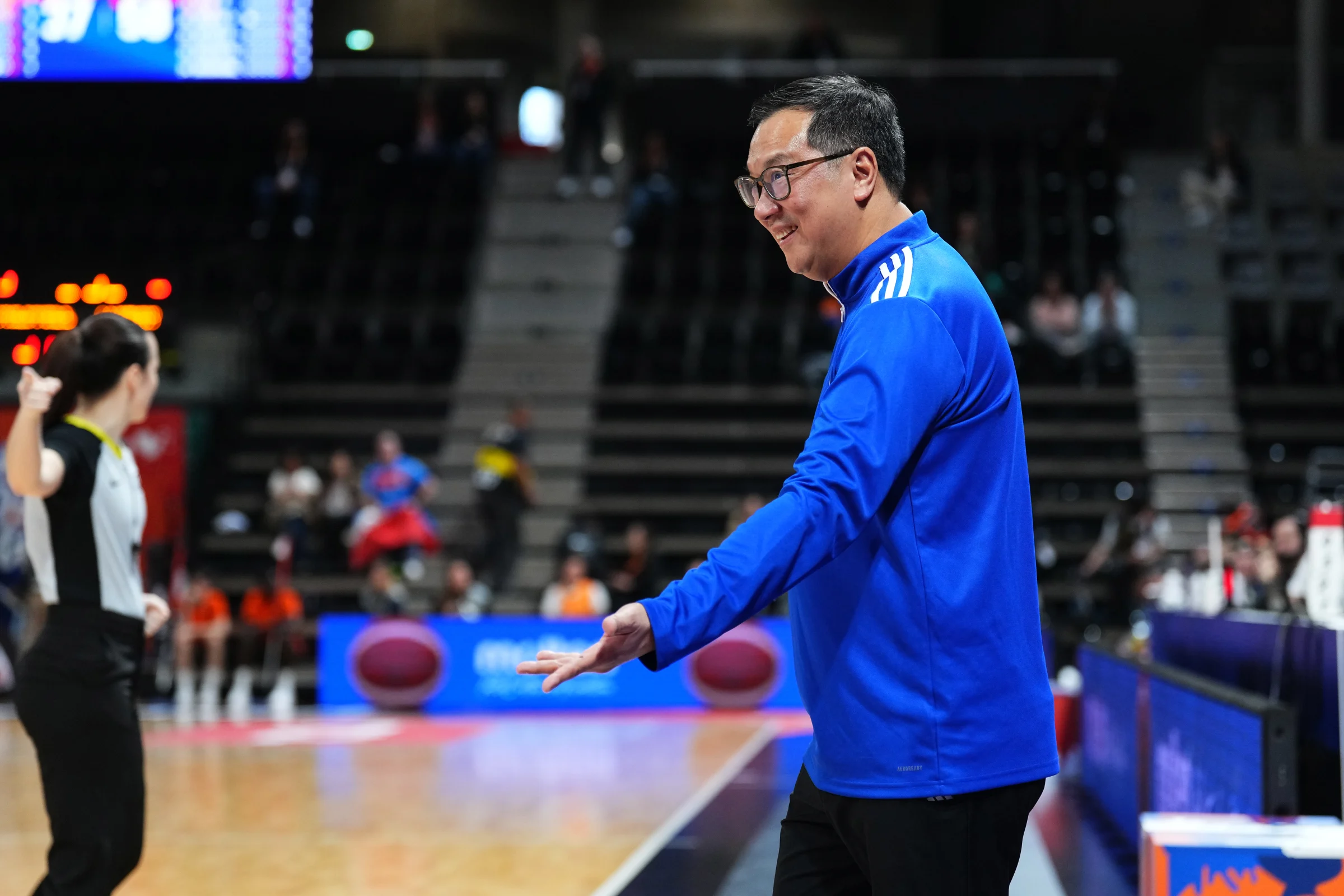
Coaching legacy intact
Yet even while the Lady Bulldogs were laying waste to the opposition for six straight years, Aquino was quietly observing a new development in the women’s basketball landscape.
“The funniest thing is, I was happy also that the level of basketball in the collegiate level was going up,” he said. “Kasi nakahabol sila (opponents) eh. So every year sabi ko, ‘You have to protect yourself from head to toe, from left to right, from front to back. Kasi nandiyan lang sila. And if you don’t do it right, or you don’t do it correctly, mahahabol ka nila.’”
And that, more than the championships and accolades, might be the Aquino’s greatest legacy to Philippine women’s basketball. With everyone was trying to chase them, the quality of players and coaching improved, and it eventually spilled over to the national team.
“What we did is really an amazing feat,” he said. “Having to be recognized already, not just here in the Philippines for that record, but having to build the national team to a level na we could say na a competitive team, leveling up team that can compete not just in Asia, but around the world.
“And just happy to be part of it, but I’m extremely proud of what the girls have done to level up everything.”
Just as Aquino helped women’s basketball, so too did the sport help him become a better coach and person.
“I’m happy that they gave me that opportunity to coach for a decade,” he said. “(A) decade long in that Gilas program, it honed my ability to coach.”
Aquino also learned that regardless of gender, a player is a player is a player.
“Actually, wala naman,” he replied when asked if there was a significant difference between coaching boys and coaching girls. “Sabi nga nila, you gotta teach everything that you know to the girls’ side. Because they can also do that. Walang hindrance na, ah, they’re not capable of doing this and doing this.”
If anything, Aquino says, girls are actually easier to coach because they’re better listeners.
“The girls, ‘pag tinuruan mo, makikinig muna sa’yo. Gagawin muna nila, tapos tsaka nila gagawin yung gusto nila. Tapos ‘yung boys naman, gagawin muna lang yung gusto nila bago sila makikinig sa’yo.”
As for what lies ahead, Aquino says he will concentrate first on his stint as an assistant coach with the Blackwater Bossing in the PBA. But something will surely come up sooner rather than later. A coach of his caliber won’t stay unemployed for very long.
In the meantime, he’s happy in the knowledge that whoever the SBP picks to fill his enormous shoes will be inheriting a solid pool and program.
“We have a good pool. But we could do it better. That’s what I say. If ever the next coach would be coming in, I hope that he or she could elevate the teamwork and make the country prouder.
“That’s naman the whole thing that we’re doing. Hindi naman ‘yung we just have to be there all the time. Ang daming nagsasabi, experience. It’s not that. It’s the way you play and the way you prepare for that.”
While his tenure as Gilas Women head coach did not exactly end the way he wanted, Pat Aquino can walk away with the knowledge that he did his part in elevating the sport.
Plus, he can also take solace in the fact that it ended the way a Pat Aquino-coached team would end it: with a convincing win.
Images from PSC/POC Media Pool
Frequently Asked Questions
Patrick “Pat” Aquino is the historic former head coach of the Gilas Pilipinas Women’s national basketball team. He served a record-setting 11-year tenure, leading the team to three consecutive Southeast Asian Games gold medals and Division A promotion.
Under coach Pat Aquino, Gilas Women secured an epic 74-59 upset victory over world no. 19 Colombia during the FIBA Women’s World Cup Qualifying Tournament in Lyon, France. This marked their first win against a non-Asian opponent.
During his dominant tenure with the National University Lady Bulldogs in the UAAP, Pat Aquino engineered a historic 97-game consecutive winning streak. He finished his university career coaching cycle with a brilliant overall record of 103-9.
Pat Aquino explicitly traveled across the country to scout raw talent, ultimately recruiting future women’s basketball legends Afril Bernardino, Gemma Miranda, and elite center Jack Animam. These players anchored the core of the Lady Bulldogs’ historic multi-year dynasty.
Following his departure from the Samahang Basketbol ng Pilipinas (SBP) national program, Pat Aquino shifted focus to domestic professional hoops. He currently serves as an active assistant coach for the Blackwater Bossing in the Philippine Basketball Association (PBA).
Related Stories