The GAME’s football expert shares his musings on the first 48-team World Cup that had everything.
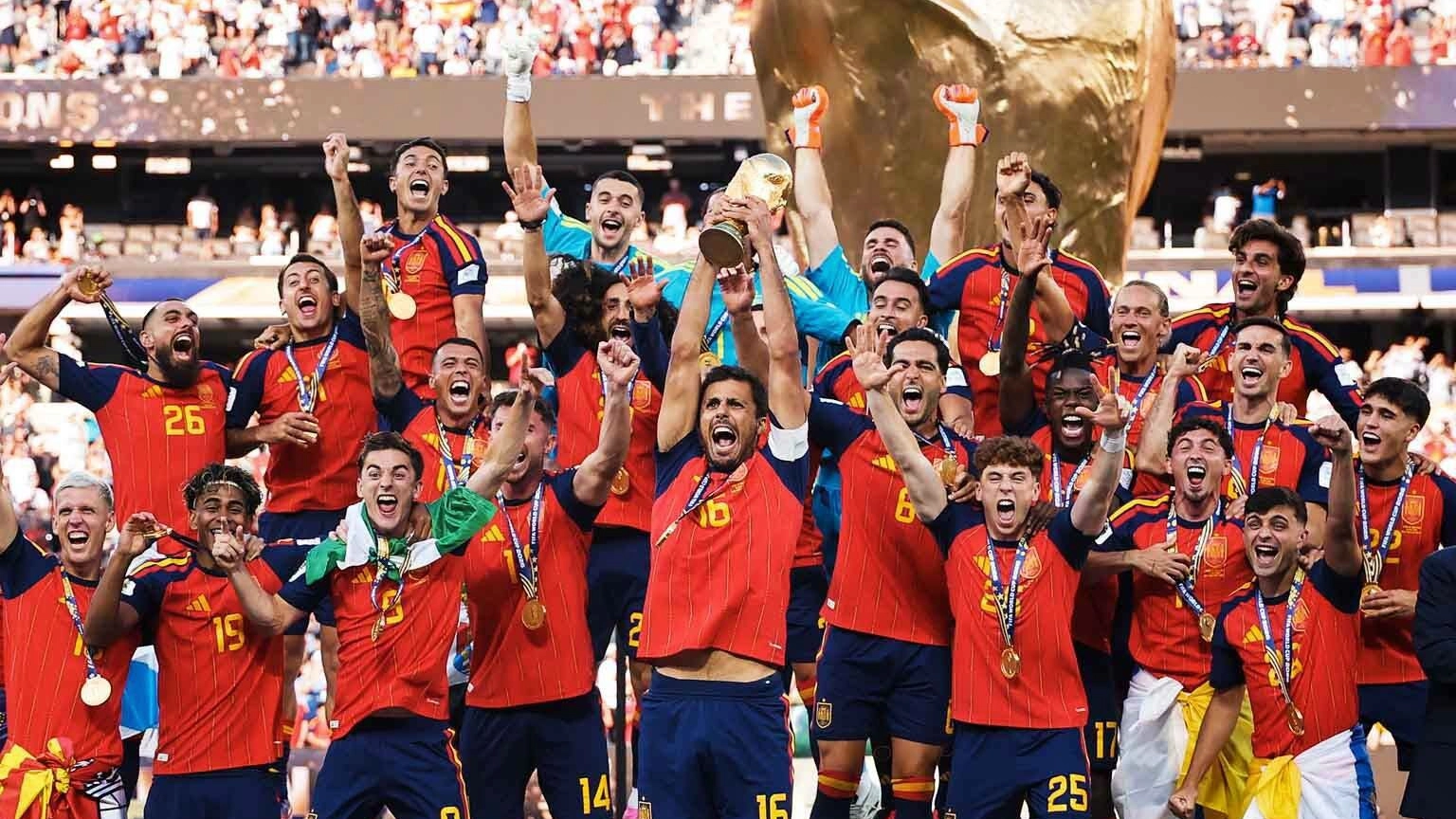
La Furia Roja now have that second star on top of the crest after dethroning Argentina 1-0 in extra time last Monday morning, Philippine time. It was the conclusion to a FIFA World Cup that featured incredible performances, a lot of controversy, its fair share of upsets, and plenty of remarkable goals. Here are my main thoughts.
Spain are triumphant thanks to getting the basics right in the middle of the park
Luis De la Fuente’s side is not the greatest ever to hoist the World Cup trophy. They don’t have a proven volume scorer like Kylian Mbappe, and were rather wasteful in front of goal in the final. But their midfield is the best in the modern international game today.
Rodri is the string-puller at holding midfield but in truth it is how this cohort plays together that is amazing. Spain play more like a club team that trains together week-in and week-out, and not a national squad that gathers together for a few matches a year. Having a lot of Barca players helps, but one imagines that there is a system in place to keep possession, and it is a good one.
Even when a Spanish ball-carrier is pressured, there always seems to be an obvious outlet pass to a free player. The key seems to be brilliant off-the-ball movement from the rest of the team. A constant, ever-changing symphony of support play means Spain rarely let you have the ball. No wonder Argentina only had two shots on goal during the final.
Spain only allowed one goal in the entire tournament. Pao Cubarsi and Aymeric Laporte anchor a great back four, but that defensive record begins with the midfield.
FIFA ran a great show, but the organization’s reputation has taken a hit
Some of the worries leading into this expanded World Cup ended up being non-issues. Many felt that having so many teams would dilute the competition and lower the standard of play. But instead some of the lesser lights like Haiti and Cape Verde had their shining moments, adding priceless moments of joy for their citizens.
I was half-expecting swathes of empty seats in the matches thanks to the exorbitant ticket prices, but that didn’t seem to happen. The stands appeared to be full in all the games I saw, meaning FIFA’s dynamic pricing system did bring the prices down to a level that was aligned with what the fans wanted to pay.
Fortunately there were no reports of ICE arrests at any of the matches, as feared.
In general, the tournament ran smoothly, and a boatload of cash was generated, I heard, up to US$15 billion. The Philippines is going to get a decent chunk of that as a member association, and these funds will help build pitches, run competitions, and develop coaches for sure.
But there were dark sides to this World Cup. The unconscionable treatment of the Iranian team, who were not allowed to sleep in the USA on match days, was a stain on the primary host nation. Fans from Haiti and Senegal were barred from entering the USA. But perhaps the biggest source of controversy was the perceived special treatment that defending champs Argentina received. Here is one Facebook video that compiles some of the calls that went the way of the Albiceleste.
Argentina, already in what looked like the easiest quadrant of the bracket, rode these questionable calls all the way back to the final. Of course we must give them tremendous credit for fantastic late goals against Cape Verde, Egypt, and England, but the friendly refereeing didn’t hurt.
We must give FIFA some benefit of the doubt. You cannot say that just because Argentina got so many calls and non-calls their way that there was some nefarious plot to nudge the biggest star in world football back into another final. FIFA would never do something as shady as that, right?
Unfortunately, they did. The decision by FIFA, (via a committee, we are told), to postpone the red card suspension of American striker Folarin Balogun until after the tournament was monstrous, especially since it was no secret that US president Donald Trump intervened with a call to FIFA president Gianni Infantino.
Not only did the Belgians protest vehemently, but so did UEFA. It was an unprecedented act of meddling that was truly the low point of the World Cup. When Belgium throttled the Americans 4-1 in the round of 16, neutrals all over the globe rejoiced.
So the series of Argentina-leaning calls and FIFA’s bizarre Balogun decision, are, as they say, an interesting set of facts.
The first semifinal winner wins the final again
What can be done to fix this? Spain didn’t just win the final because of their superior tactical and technical quality. The Roja also had the advantage of one more day of rest than Argentina, since their semifinal against France was played a day before Argentina defeated England.
Having four full days of rest instead of three must have helped the Spanish. That is an extra 24 hours to rest weary bones and aching muscles, rehab minor injuries, and prepare for your next opponent.
With this victory, five of the last six FIFA Men’s World Cup final matches have been won by the first semifinal winner. The one exception was in 2010 when Spain, with one day less rest, beat the Netherlands in South Africa. It appears the trend is similar in women’s competitions and in the European Championships too.
Why can’t FIFA just have the semifinals played on the same day? For me, it all has to do with the scheduling. Every World Cup is a carefully scheduled series of games that tries to give opposing teams similar preparation times. If the semis are held on the same day then the problem gets pushed back to the quarterfinals, with one half of the elite eight teams possibly gaining an unfair advantage. This is an issue FIFA will have to look into, especially since they are pondering expanding once again to 64 teams in 2030.
For me the extra day of rest is too much of a leg up for one team, especially with modern football where pressing is so prevalent. My best solution is to keep the semifinals on separate days but tack on an extra rest day for both squads before the final. That way the advantage to the first semifinalist is somewhat lessened. Working backwards, the tournament therefore will need to begin a day earlier.
The World Cup is over, and now we put our attention to the upcoming ASEAN Hyundai Cup
Yes, this biennial competition in the ASEAN sub-confederation, now moved to mid-year, is not the World Cup. But this time, there is no need to adopt another country to support. We can cheer for our very own team, and we can watch them in person. Two home games at New Clark City Stadium in Tarlac on July 28 against Myanmar and August 4 versus Thailand. All the details are here.
The World Cup may be over, but the excitement of football never stops.
Banner images from FIFA
Frequently Asked Questions
Spain won the 2026 FIFA World Cup, beating defending champions Argentina 1-0 in extra time for their second world title. The tournament was the first to feature 48 teams, expanded from 32, and was co-hosted by the United States, Canada, and Mexico.
Spain’s title run was built on midfield control rather than a prolific scorer. Anchored by holding midfielder Rodri and driven by constant off-the-ball movement, the side retained possession like a club team and conceded only one goal across the entire tournament.
The tournament drew criticism over refereeing decisions that favored Argentina and over FIFA postponing the red-card suspension of US striker Folarin Balogun after reported political intervention. Concerns were also raised about the treatment of Iran’s team and fans barred from entering the host nation.
The 2026 World Cup was the first to feature 48 teams, expanded from the previous 32-team format. The larger field increased the number of nations and matches and allowed smaller footballing countries such as Haiti and Cape Verde to reach the finals for the first time.
The Philippines plays two home matches in the 2026 ASEAN Hyundai Cup at New Clark City Stadium in Tarlac — against Myanmar on July 28 and Thailand on August 4. The biennial regional competition moved to a mid-year schedule for this edition.
Related Stories