
Recommended Video
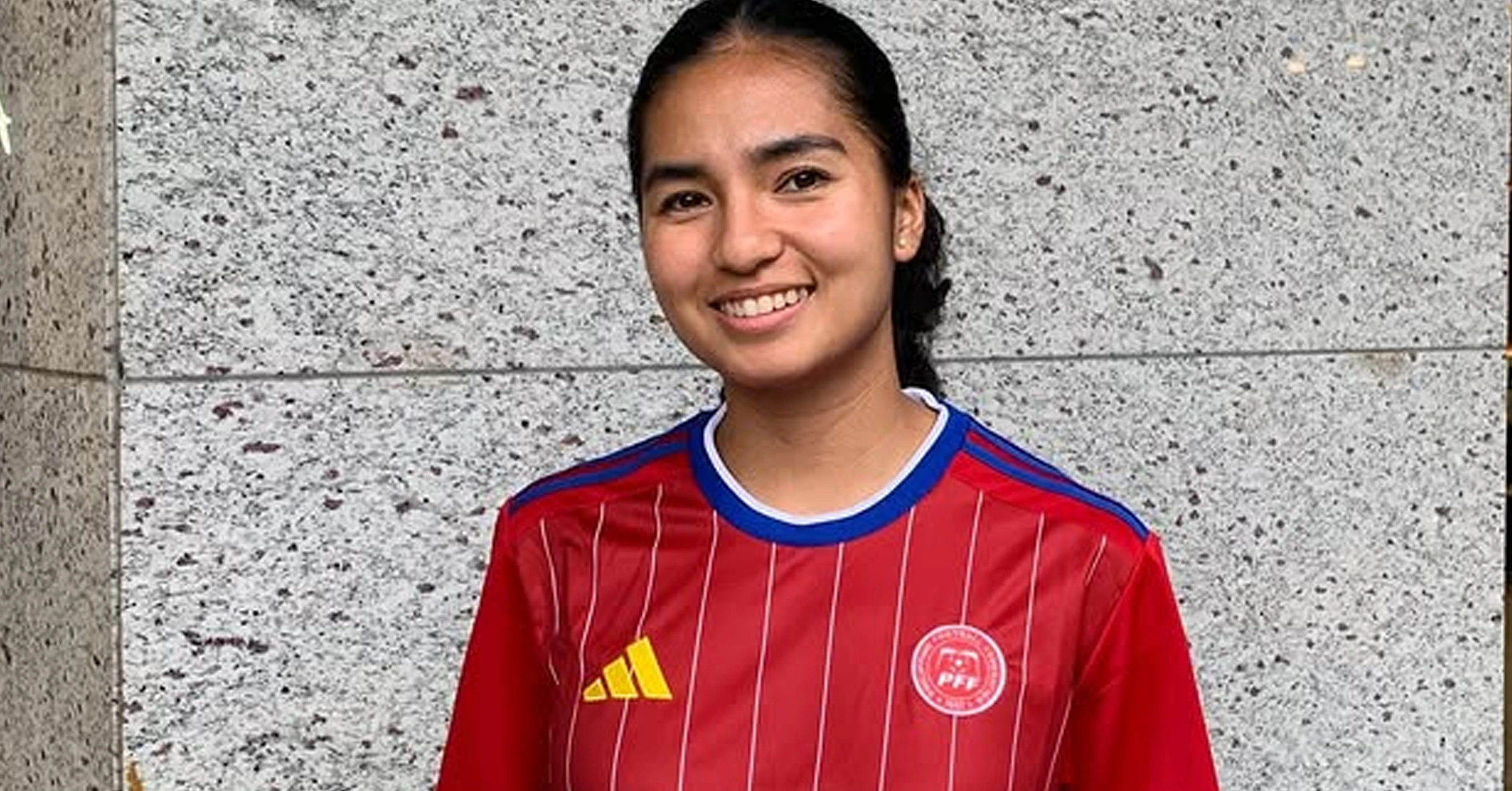
A longtime national team player, Cam Rodriguez has fully embraced her new role as an advocate and visionary for women’s football in the Philippines.
Women’s football is, without question, one of the most progressive sports in the Philippines, and the Philippine Women’s Team is perhaps the biggest reason for this. The Filipinas, as they are collectively known, recently booked a second straight appearance in the FIFA Women’s World Cup, just months after winning the country’s first-ever gold medal in women’s football at the Southeast Asian Games.
As a member of the national team since she was 16, Camille Rodriguez has had a front-row seat to the sport’s peaks and valleys – from lopsided losses to regional Southeast powerhouses to taking down New Zealand in front of 32,000 fans at the 2023 FIFA Women’s World Cup.
And while she remains on call for national team duties and still plays professionally for Kaya FC in the Women’s Philippines Football League (WPFL), Cam has begun spreading her wings to other areas of the sport. She recently began her sportscasting career, signing on as an analyst for the UAAP Season 88 women’s football games.
“So right now I play many roles in the women’s football space,” she told The GAME. “But the main ones that I do play right now is I’m a footballer. I play professional football in Kaya. I also do broadcast. So I commentate games, do pitchside talks, break down the analysis side.
“And then lastly, I am now the head of women’s football development in PFF (Philippine Football Federation). So that means I work with both PFF and FIFA to really basically mount projects that grow pathways for women in football here.”
That last tidbit of information she shared is also the most crucial here, and is central to what Cam feels is her advocacy: to advance women’s football in the country through different initiatives.
“So whether that be players, referees, coaches, that is mainly my role, to lead and grow those initiatives. That’s the short and long of it.
“My expanding of roles from just being a player really happened within the past two years. I am in that transition period so from being a full-time player national athlete now transitioning to really grow the game here locally in the Philippines.
“Part of growing the game here in the Philippines is really growing the game globally. I do projects here that grow the grassroots and the communities, but it feeds into the bigger movement which is women’s football globally really has been growing so I felt that opportunities opened up for me and very grateful for these opportunities right on a national level with FIFA also. So, it felt natural to some extent that I’ve always been passionate about growing women’s football here in the country.”
Right woman for the job
This new role with the PFF is tailor-fit for Cam Rodriguez, for not too many female footballers have given as much as she has to the national team and the sport in general. It was an uphill climb, one that at times appeared to have no end in sight.
“It’s funny that you use the word gentle because outwardly it’s very gentle,” she noted when this writer described the sport’s trajectory as having a “gentle progression.”
“The progression makes sense. But as someone who’s been there 15 years I was in a national team many times it did not feel gentle. It felt like you really had to work for it. You really had to embrace the challenges that came with playing for the flag with growing the game.”
Those challenges included, in the early days before the Azkals changed the trajectory of the sport forever, virtually zero media coverage and very little private sector support. It was, Cam recalls, something akin to a bayahinan effort.
“Sa youth national team in 2009, back then it was the under-16 national team, talagang lahat tulungan. ‘Yung mga parents naghahanap ng sponsors, ‘yung federation trying to really put up a national team. So when you look at growth it’s that now parang may standards na. May practices, procedures. There’s an expectation of professionalism already right now. But prior it was a lot of figuring out, a lot of learning, growth. But really figuring out along the way.”
The results gradually improved, before that big breakthrough in 2022 where two events conspired to break the dam wide open.
“That Chinese Taipei game in the Asian Cup, that shootout,” Cam recalled, referring to their historic win that qualified them for the 2023 Women’s World Cup. “To have that mental resilience knowing that all the months leading up to that as a team. I feel like that was a strong moment of belief for the team now. ‘Hey, we really want this. we got it.’
“But alongside that moment, such a historic moment for me, it was the game in the AFF Women’s Championship. this was in Rizal Memorial. We played Vietnam in the semifinals. Vietnam also historically we’ve lost to them by big scores and youth level and then senior level also. But in that game, right, we won it in a very emphatic way.
“Of course, (the win against Chinese Taipei was) special on an Asian level, where it had implications to global qualifications, which is the World Cup. But the semifinals game versus Vietnam and AFF championship was pretty special because it was more personal. We were against a rival who we’ve had so much history with and we hadn’t won yet. I remember by goal number two, I was like, ‘Is this actually happening? Are we headed into the finals? Are we going to be a medalist on a regional level?’ We’d never got into the finals prior to that.
“So, it felt like a personal moment of belief for me that, hey, we’re here. we’re not just competing, but we’re beating teams now. And what made it even more special was that it was of course, in front of the home crowd. Game by game, it really grew. And that support I feel has delivered us also.”
Since she lived through the tough times, the gradual improvement, and ultimately the historic results, Cam knows not to take anything from granted.
And she’s happy that there’s now a sense of commitment among the different generations of the national team – from the OGs to the Malditas era to the current batch of Filipinas – to pay it forward.
“What stands out when I reflect in that journey is that it’s always been a no-brainer choice for me personally for my teammates also to continue to just give for the flag and thankfully it paid off,” she says. “That’s why I appreciate the group of players that came before recognized that we were doing it for the present. But now even the present team also recognized that they’re here because of what has been given prior and what the road that has been laid out for and now it’s like you’re paying it forward.
“And getting to do that I think is really an honor of a lifetime. One of the greatest privileges for me personally.”
A vision for women’s football
In the middle of last year, Cam Rodriguez was presented with a unique opportunity to further advance the cause of women’s football in the Philippines. The Philippine Football Federation (PFF) offered her the role of Head of Women’s Football Development, and it was an easy decision.
“I entered it with the intention of really growing the game locally and putting the dreams and the vision and the priorities of the local players and community here forward.,” she explains. “And I think that was very clear to me as a professional, but also clear with the leadership of PFF as a vision because that’s also their vision as a federation, which is to make the local scene more competitive and make sure it’s inclusive.”
The new job entails traveling all over the country to meet with the different regional football associations (FAs) as well as establishing a working relationship with FIFA to keep in step with the sports body’s global direction of promoting women’s football.
Cam describes her leadership style as “collaborative,” designed to listen first and get a good lay of the land. Late last year she organized a workshop for the different stakeholders and timed it to coincide with the country’s hosting of the FIFA Futsal Women’s World Cup.
“We had three online sessions really assessing (with) SWOT analysis and then we flew them out during the FIFA Futsal World Cup to get to witness women’s football be front and center. So it’s cool because people also recognize ‘Hey, this is different’ because usually it’s a few deciding the next steps moving forward.”
“My role here is to really connect the efforts on the ground, the people who are doing good work with the opportunities that the federation has, that FIFA has,” Cam explains. “And my programs are really just grounded with that intention to connect to collaborate and to really put forward the needs of professionals in the women’s full space.”
One main goal for Cam is to simply give female players more venues to play.
“A highlight from that workshop series that leagues need to be more consistent. For those who already have leads to elevate it even further, to grow it even more, to accept more teams. And then for those who don’t have leagues, they would want to have more regular leagues.”
The sheer scope of work, though, makes this goal easier said than done, considering the number of football associations involved. But Cam has a plan.
“There are 38 regional FAs and each one has their own context. So what came out of that conversation with them is that they would want more professional leagues to give more opportunity to administrators, also to coaches, to referees, to have a league to practice in.
“So that’s one and the second opportunity that came out from the conversation is to build more capacity for the people, the professionals working in the space. I say professionals because realistically men are in the women’s football space. And that’s okay, but it’s growing their opportunity, but prioritizing still the pathways for female coaches, female referees, female managers, media etc.
“So if I were to summarize, two opportunities that came from the conversation. ‘Yun talaga, leagues and also capacity building opportunities. My programs this year are centered on that to elevate the league experience and to share capacity-building opportunities.”
Peering into the future, Cam firmly believes that the Filipinas will still be among the region’s elite teams, with the youth teams gradually gaining ground.
“We’ll definitely still be in the World Cup,” she says. “That I believe wholeheartedly in a senior level, but also I believe our youth national teams will be competitive also. Now the goal is to also qualify for that World Cup (U18). So that’s on a global level. Locally, I wholeheartedly believe growth in participation. I am a very optimistic person so by 10, 20, 30%. And also more visibility for female professionals in the space and we have already growing numbers.
“Gusto ko pang puliduhin pa ang mga pathways para mas madaling masabi ng isang female professional, ‘Hey, gusto kong mag-coach’ or ‘Gusto kong mag-referee’. Ito ang mga kailangan gawin.”
“So there. To be globally successful, continue our success, hopefully make it to the knockout rounds, and then locally to have consistent leagues in Manila, more teams in UAAP.”
Ultimately, Cam Rodriguez believes in the power of teamwork not just on the pitch but off it. If everyone gets on the same page, then the Philippines can reach even further heights in women’s football.
“We’re planting seeds, but we need everyone to, continue to water it and nurture and likewise, for me, it’s you help us, but we also help you.
“I personally believe there’s always opportunities to help each other especially if the goal is the same which is to grow women’s football and football in the Philippines.”
It may very well be part of a higher calling for Cam.
“I hope to believe it’s just my purpose in life.”
Banner images from Cam Rodriguez Instagram.
Frequently Asked Questions
Cam Rodriguez is a Filipino professional footballer who plays for Kaya FC in the Women’s Philippines Football League and serves as Head of Women’s Football Development at the Philippine Football Federation. She has been a member of the Filipinas national team since age 16.
The PFF Head of Women’s Football Development leads initiatives to grow pathways for female players, coaches, referees, and managers across the Philippines. The role involves working with both the Philippine Football Federation and FIFA to mount programs that develop the women’s football ecosystem at grassroots and professional levels.
Cam Rodriguez’s two primary development priorities are building more consistent and accessible leagues across the Philippines’ 38 regional football associations, and creating capacity-building opportunities for female professionals in the football space — including coaches, referees, and media practitioners.
The Philippines qualified for consecutive FIFA Women’s World Cups after a historic penalty shootout win over Chinese Taipei in the 2022 AFC Women’s Asian Cup and followed up by securing a second consecutive berth. The team also won the country’s first women’s football gold medal at the Southeast Asian Games.
The Women’s Philippines Football League (WPFL) is the top professional women’s club football competition in the Philippines. It provides the primary domestic competition platform for Filipino players, including national team members. Cam Rodriguez competes in the WPFL as a player for Kaya FC while also fulfilling her PFF development role.