It’s only slightly larger than Metro Manila, but Singapore has managed to position itself as a hub for sports and leisure in Asia.
The recently concluded “Festival of Basketball” — a stretch of 11 days in June where two major youth-oriented NBA events were held one after the other in Singapore — underscores the city-state’s thrust to become a major hub for international sporting events.
Until recently, perhaps the biggest sporting event associated with Singapore was its leg of the Formula One circuit — although to be fair, that in itself is indeed a major international event and a very big one to host.
Yet since the start of 2024, Singapore has hosted the HSBC Women’s World Championship which is a leg of the LPGA, the WTA-backed Singapore Open tennis tournament, LIV Golf Singapore which is part of the LIV Golf Tour, and just last month the aforementioned “Festival of Basketball”: Basketball Without Borders Asia 2025 and NBA Rising Stars Invitational. Still slated for the rest of the year are the World Aquatics Championship in August and the F1 Singapore Grand Prix in October.
For a country that’s just slightly bigger than Metro Manila, that is a truly impressive lineup of sporting events. Yet Singapore has always had the proper infrastructure — be it facilities, transportation system, or accommodations — to mount such ambitious events. Importantly, the government is also committed to this cause.
“Sports events bring people and passion together and continue to be an integral part of our strategy to bring in quality events that appeal to our visitors and locals,” Lilian Chee, Director for Sports of Singapore Tourism Board, told The GAME in an exclusive interview via email. “Events like the NBA Rising Stars Invitational are a big draw for locals and overseas fans, who plan their travel itineraries around them to spectate or participate.
“Such events can be primary drivers of visits, enhancing our destination appeal and global branding value. These events also generate significant economic benefits, creating spillover effects for our retail, dining, and hospitality industries and providing employment opportunities for locals.”
Indeed, Singapore has set an ambitious goal: to be the premier destination in Asia for sports and leisure.
“Driven by our ambition to become Asia Pacific’s premier leisure events hub, we will intensify our efforts and work with relevant partners to deliver compelling events that build visitor arrivals, drive tourism receipts in the long term, and strengthen Singapore’s position as a leading events and entertainment capital.”
Leading the charge in tandem with the Singapore Tourism Board is Sport Singapore (SportSG), a government agency whose mission is to “inspire the Singapore Spirit and transform Singapore through sport.” SportSG takes the lead in securing partnerships with known international sporting brands and federations, with the mission to bring their events to Singapore.
“Partnerships with overseas event owners and International Federations form a key component in Sport Singapore’s (SportSG) overall strategy to raise the profile of sport and inspire higher participation levels,” Roy Teo, Chief of Industry Development of Sport Singapore, told The GAME.
“Events like Basketball Without Borders (BWB) and the recently concluded NBA Rising Stars Invitational (RSI) serve as ideal platforms to inspire our young athletes towards sporting excellence and enable them to compete against regional giants. Such partnerships also help to grow interest and create opportunities for the community to learn about the sport, through spectating competitions and participating in community activations like clinics or tryouts.”
As reported by The GAME, this year’s NBA Rising Stars Invitational is just the first of many.
“The partnership with the NBA is a multi-year collaboration,” Teo continued, “and we aim to enhance the event experience through improved fan engagement and community activations for subsequent editions to attract more spectators and participants from the region.”
When it comes to regional sporting events involving thousands of athletes from different nations, such as the Asian Games, Teo said they must evaluate these carefully.
“Any consideration of hosting major sporting events would require careful evaluation of our capabilities, resources, and national priorities. This includes assessing potential sporting, social, and economic benefits against the substantial investments in infrastructure, manpower, and other resources that an event of this scale would demand.”
Two such events are set in the coming weeks.
“At present, our focus remains on ensuring the successful implementation of our current sporting commitments, such as the upcoming World Aquatics Championships and World Aquatics Masters Championships,” Teo said. “These events will attract around 2,500 and 6,000 athletes respectively from around the world, who will be competing across six aquatic disciplines from July to August.”
And although it’s still four years away, Singapore is already laying the groundwork for hosting ASEAN’s biggest sporting event.
“We will also start preparations for hosting the SEA Games in 2029. We aim to showcase the best that Singapore has to offer to our Southeast Asian neighbors and look forward to welcoming the best athletes from the region.”
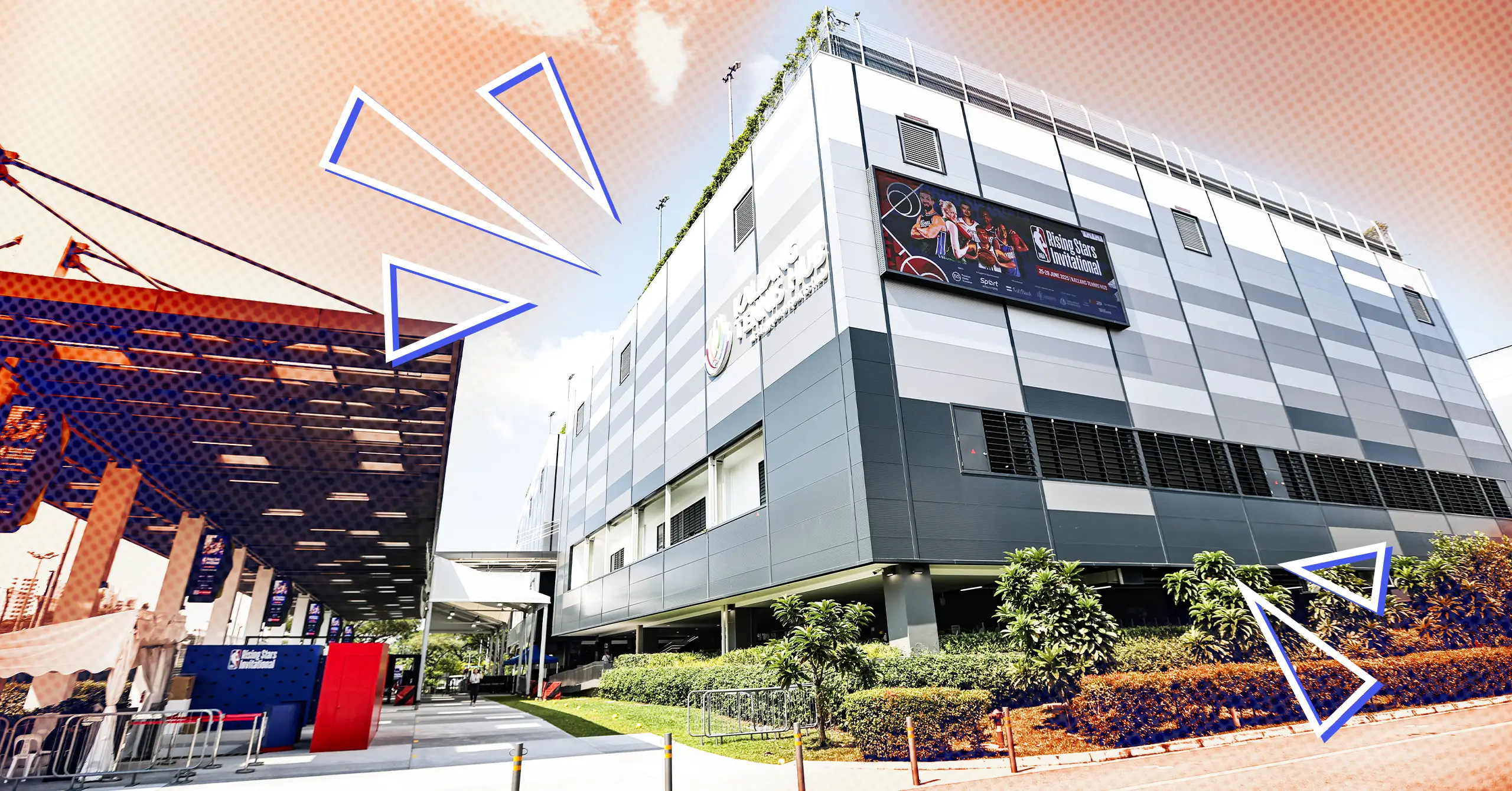
Banner Images from NBA Rising Stars Invitational
Related Stories