
As 2025 draws to a close, let’s look back at the top 25 moments that helped define Philippine sports in the new millennium.
And just like that, the first 25 years of the new millennium have gone by. It was a quarter century like no other, especially with regard to Philippine sports.
It was a quarter century that brought us Manny Pacquiao, Hidilyn Diaz, Carlos Yulo, Alyssa Valdez, Justin Brownlee, and Alex Eala. It was a quarter century of firsts: first taste of Olympic glory, first Asian Games men’s basketball gold in 61 years, first UAAP championships in decades for UP and NU, first singles win by a Filipino tennis player at a Grand Slam.
We at The GAME thought it would be neat to look back at that time period between January 1, 2001 (the 21st century actually began on this date) and December 31, 2025, choose the top 25 Philippine sports moments and then rank them from 25 to 1.
Of course, picking the 25 moments and then having the gall to rank them is highly subjective. We therefore drafted some guide questions that are either intellectual or visceral.
The intellectual questions:
Was Philippine sports history made?
Did the athlete or team win a world title?
If it was a local event, did the team or athlete do something extraordinary?
The visceral questions:
Did it make you cry (either for joy or for despair)?
Do you get goosebumps remembering it?
Do you remember where you were when it happened?
If you see a video of the event in your social media feed, do you watch and then repost it with the caption “XX years ago, this happened”?
If the event produces a “yes” for at least two intellectual questions or at least two visceral questions, then it qualifies for consideration. Ranking them from 25 to 1 was a little more challenging, but our guiding principle was generally the magnitude of the event. International events – especially those that resulted in victory – were given higher rankings, while impact on the casual fan was also considered.
We tried to represent as many sports and athletes as possible, but it couldn’t be helped. Some sports and athletes are simply newsmakers several times over. We also acknowledge the fact that the timelines are more skewed towards the last 10 years. That’s simply because Philippine sports has exploded on the international stage in recent years.
In any case, we present to you the top 25 Philippine sports moments from the last 25 years, from 25 to 1.
25. The NU Bulldogs survive five knockout games, end 60-year wait (2014)
Entering UAAP Season 77, the NU Bulldogs had little reason to believe they would duplicate their no. 1 seed elimination round finish from the previous year. Their best player and two-time MVP, Ray Parks, had decided against returning for another season, while other teams had gotten better.
And sure enough, the Bulldogs found themselves in a playoff for the fourth seed against the UE Red Warriors, with the loser heading home. It was an ugly game, devoid of offense, and the Bulldogs had to hold their breath as Bong Galanza missed a triple at the buzzer that would have won it for UE.
In the Final Four, the Bulldogs had to win twice against the no. 1 seeds Ateneo Blue Eagles, who were enjoying a solid run behind Kiefer Ravena and Chris Newsome. NU proceeded to stun everyone by doing just that, outplaying Ateneo 78-74 and 65-63 to advance to the finals where a loaded FEU Tamaraws squad waited for them.
The Tamaraws were heavily favored, and with good reason. They had future pros Mac Belo, RR Pogoy, Raymar Jose, Carl Brian Cruz, Russell Escoto and Mike Tolomia on their roster. The Tamaraws quickly flexed their muscles by taking Game 1, putting the Bulldogs in another pair of must-win games.
Somehow, the Bulldogs responded again. They blew out the Tamaraws in Games 2 and 3 by double digits to claim the school’s first UAAP men’s basketball championship in 60 years. That remains the longest time between titles in league history, and their run of winning five elimination games is one for the ages.
24. It’s a “beeracle” for San Miguel (2016)
Prior to the 2015-16 PBA Philippine Cup Finals, 16 teams in PBA playoff history had gone up 3-0 in a best-of-seven series, and all 16 had won. So history was not on the side of the San Miguel Beermen after the Alaska Aces thumped them 82-75 in Game 3 to take a virtually insurmountable series lead. Then in Game 4, the Aces were up by 11 late in the fourth quarter. A sweep seemed inevitable.
But as they say, there’s always a first time for everything. The Beermen came back to win Game 4 in overtime to stay alive. In Game 5, SMB got a boost with the return of June Mar Fajardo from a knee injury, and they won again in overtime to cut the series lead to 3-2.
Game 6 was another Beermen victory after they broke open a close contest in the fourth quarter, and just like that, the series was headed for a seventh game. Suddenly, history was beckoning at the doorstep of both franchises.
Game 7 started out in the most bizarre way imaginable, with Aces coach Alex Compton calling three straight timeouts in the opening minute. But he was just delaying the inevitable, as the Beermen took control early on and cruised to a 96-89 win. The comeback was complete and history was made. A few years later, the “beeracle” even made its way into a New York Times article on the greatest comebacks in professional sports.
23. Filipinas win gold in Bangkok (2025)
The most recent entry in this list, but certainly worthy of inclusion. How could you ignore what the Philippine women’s national football team did at the 2025 Bangkok Southeast Asian Games? Before Bangkok, no Philippine football team – men’s or women’s – had ever achieved a podium finish in the SEA Games.
At the start of their campaign, it appeared like the Filipinas wouldn’t be the ones to break the drought after they fell to Myanmar in their opening match. That put them in a must-win situation against defending champions Vietnam, and it took at 93rd-minute goal from Mallie Ramirez to keep their campaign alive. They weren’t out of the woods yet, but favorable results in the final group stage match day saw them through to the knockout stages.
In the semifinal, they faced the hosts and looked headed for elimination with just four minutes left in regulation and Thailand up 1-0. But a handball in the Thai penalty area allowed Jael-Marie Guy to level the count and send the match into extra time and later a penalty shootout. The Filipinas scraped through the PSO, 4-2, to advance to the gold medal match where Vietnam was waiting for revenge.
The final wasn’t without controversy, as a goal by Vietnam in the 30th minute was disallowed after the linesperson called it offside. But with the gold medal on the line in yet another penalty shootout, it was the Filipinas who didn’t flinch, sinking all their six attempts to make history.
22. Ateneo shocks La Salle in UAAP women’s volleyball (2014)
If you could pick a moment when Philippine volleyball went from popular to really, really popular, you wouldn’t be wrong if you said the UAAP Season 76 women’s volleyball finals between archrivals Ateneo and La Salle.
The Green Archers were the reigning, three-time defending champs, and were bannered by a dream team composed of Abby Maraño, Kim Fajardo, Mika Reyes, Ara Galang, Majoy Baron and Kim Kianna Dy. A fourth straight title seemed inevitable after they went 14-0 in the elimination round to book a spot in the finals.
Inspired by their “Heartstrong” mantra and guided by Thai mentor Tai Bundit, the Lady Eagles had to go through a virtual gauntlet of volleyball stars to reach the finals. They first had to beat an Adamson squad that had Mylene Paat, Bang Pineda and Jema Galanza in the first stepladder game. Then they overcame a twice-to-beat disadvantage in the Final Four against the Santiago sisters and the NU Lady Bulldogs. In the finals, they faced a thrice-to-beat disadvantage against that loaded DLSU team. Ateneo, though, had some pretty good players of their own in MVP Alyssa Valdez, Denden Lazaro, Amy Ahomiro and Ella De Jesus.
Both teams split the first two games of the finals, and in the third game, the Green Archers were at championship point, 15-14, in the fifth set. But they couldn’t close it out, and Ateneo came back to win it and force a decider.
Game 4 was anti-climactic, a three-set sweep that gave Ateneo its first-ever UAAP women’s volleyball title. After that, volleyball exploded on the scene, and Alyssa Valdez went from phenom to a household name.
21. Gilas Pilipinas and the Boomers get into it (2018)
Not all entries in this list have a positive outcome. That doesn’t mean they weren’t historic in nature. And as much as we’d love to forget what happened on the night of July 2, 2018 at the Philippine Arena, it’s impossible to list down major moments in Philippine sports this century without mentioning the FIBA World Cup 2019 Asian Qualifiers game between the Philippines and Australia.
Well, it appeared to be a basketball game for at least the first half. In the second, things turned from chippy to violent after Boomer Daniel Kickert planted his forearm into the neck of RR Pogoy following the latter’s hard foul on Christ Goulding. By this time, the Boomers were already ahead by 31 and the outcome was virtually decided.
Kickert’s reaction happened in front of the Gilas bench, which very quickly emptied. Before long a full-blown fracas was taking place, and the game had to be halted for several minutes as officials took on the unenviable task of sorting out who hit whom, who should be ejected, and who behaved. When the smoke finally cleared, nine Gilas players and four Boomers were ejected. As Gilas was left with just three players, June Mar Fajardo and Gabe Norwood intentionally fouled out to virtually concede the game to Australia.
The aftermath was just as brutal. Six Gilas players and three Boomers were levied suspensions of varying degrees, while Chot Reyes and assistant Jong Uichico were also suspended. Both federations were handed hefty fines by FIBA, and the Philippines was ordered to play its next home game behind closed doors. The Gilas program was rebooted, with Yeng Guiao taking over as coach and eventually completing the goal of qualifying for the 2019 World Cup.
20. Justin Brownlee hits a triple at the buzzer and a legend is born (2016)
Sometimes, a player and a team are just meant to be. Justin Brownlee was not Barangay Ginebra’s original choice as its import for the 2016 PBA Governors’ Cup. But after Paul Harris suffered a hand fracture early on, the Kings were left scrambling for a replacement.
In came Brownlee, a virtual unknown to PBA fans. He quickly established himself as a fan favorite, though, a big deal if you’re playing for the most popular PBA team of all time. But there was also a lot riding on Brownlee’s stint. The Kings had just hired Tim Cone to try and reverse their fortunes, for by 2016 the franchise had gone eight years without a championship – their longest dry spell ever.
Brownlee led Ginebra to the finals against the Meralco Bolts, and heading into Game 6 they nursed a 3-2 series lead. The game went back and forth, with neither team able to take command and pull away.
With less than 20 seconds left and the game tied at 88, the Bolts had the ball and went to Allen Durham. He drove hard to his left and put up what would have been the go-ahead basket, but his layup bounced out.
After Ginebra sued for time, Sol Mercado inbounded the ball to Brownlee. He sized up Durham’s defense, dribbled three times to his right, and launched a triple at the top of the key that found its mark. Game over, championship drought ended. It was a genuine “where were you when…” moment that will be forever etched in Ginebra lore, and it elevated Brownlee to the pantheon of Ginebra legends.
19. Django Bustamante is finally a world champion (2010)
For years, Django Bustamante always played second fiddle to the great Efren Reyes, the Robin to Reyes’ Batman. Bustamante was an excellent player in his own right, one of the top five in the world during his heyday. But for the longest time he could never quite get over the hump when it came to winning a world championship. Meanwhile, other Filipinos such as Ronnie Alcano and Rodolfo Luat had already won theirs.
That all changed in July 2010 in Doha, when he finally lifted the world 9 ball trophy after beating Kou Po Cheng, 13-7, in the championship match. Bustamante had earlier defeated his compatriot and fellow 2002 Asian Games gold medalist Antonio Lining, 11-5, in the semifinals, to book his place in the final.
The victory exorcised some personal demons for Bustamante as it came roughly eight years after a crushing defeat to Earl Strickland in the 2002 World Pool Championship final, where he had to play through tremendous grief following the sudden passing of his infant daughter two days prior. But he soldiered on and actually led the race-to-17 final by two racks late before Strickland pulled off a comeback.
18. JD Cagulangan ends UP’s 36-year wait (2022)
For much of the first 21 years of the 21st century, the UP men’s basketball team was the butt of UAAP jokes. Several winless seasons plus a Final Four drought that lasted 22 years fueled all this. “Sure win” and “practice game” became common synonyms for a match against the Fighting Maroons.
UP finally broke through with a Finals appearance in 2018 and made the Final Four the following year, but a first title since 1986 remained elusive. Entering UAAP Season 84, the defending champions Ateneo Blue Eagles looked primed to win their fourth straight title with a loaded and veteran lineup. They went on to win their first 13 games.
Their final game was against the Fighting Maroons, who were playing their first season under Goldwin Monteverde. In a portent of things to come, UP dealt Ateneo its first loss in nearly four years. The two sides would meet in the finals, where they played an epic Game 3 that went to overtime.
On the last possession, with the score tied at 69, JD Cagulangan broke free for a triple that hit nothing but net as the buzzer sounded. That shot was dramatic for two reasons: not only did it end a 36-year championship drought, it remains the only UAAP championship-winning buzzer-beater in a Game 3 in the 21st century.
17. Alex Eala wins opening US Open match (2025)
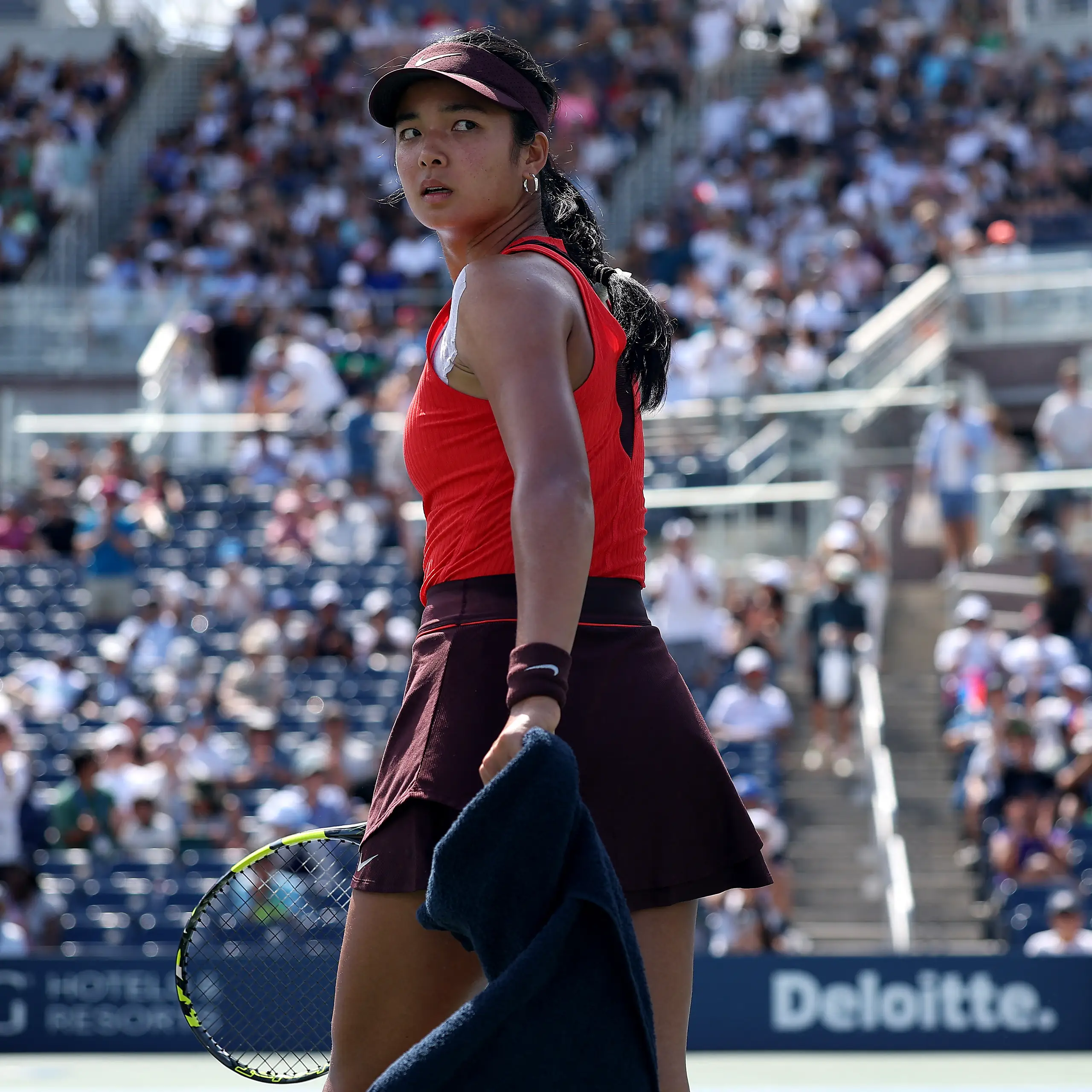
Before the 2025 US Open, Alex Eala had already accomplished so much for Philippine tennis. But she had yet to win a Grand Slam singles match.
By this time, she was already a known commodity in the WTA circuit and quite possibly the most popular Filipino athlete of this era. She had just won her first WTA title and had gone on a magical run to the semifinals of the Miami Open. But she had also fallen in the first round of Wimbledon and Roland Garros, and didn’t survive the qualifiers for the Australian Open.
At the US Open, Eala drew 14th seed Clara Tauson, a Dutch player who had once been ranked as high as 12th in the WTA. Eala won the first set, 6-3, but Tauson took the second 6-2 and was up 5-1 in the deciding set. It was pre-dawn in the Philippines, but it appeared as if everyone was awake to watch Eala win the next five games to take a 6-5 lead. Tauson eventually forced a tiebreak, but Eala held firm and won 13-11. While doing so she even provided 2025’s top viral sports moment as she appeared to utter an unprintable Filipino curse following a crucial point won.
Eala eventually lost her second round match to Cristina Bucsa, but she had already made history as the first Filipino tennis player to win a singles Grand Slam match.
16. Carlo Biado becomes a three-time world champion (2025)
As Filipino pool legends Efren Reyes and Django Bustamante gradually stepped away from the sport in the 2010s, there was a void at the top of the pecking order. And while the Philippines still had an embarrassment of riches in terms of pool talent, it was Carlo Biado who emerged as the best of the rest.
Biado first made his mark on the global stage when he won his first world title, the World Nine Ball Championship, in 2017. Seven years later, he won his second, this time in 10-ball, drawing him level with his idol Reyes in terms of world titles won.
Last July, The Black Tiger surpassed the Magician for most world pool titles won by a male Filipino player when he won his second 9-ball title. It didn’t come easy, though, for Biado had to topple the best player in the world in Fedor Gorst.
Yet even before the final, Biado called his shot. After disposing of compatriot Bernie Regalario 11-3 in their semifinal, he was asked who he preferred to face in the final. Without hesitation, he said Gorst. He got his wish, but there might have been times during the final when it looked like it would backfire. Biado raced to a 9-2 lead, before Gorst came charging back to level it at 9 and then again at 13 in the race-to-15 final. But Biado composed himself and swept the last two racks to pocket $250,000 and put himself in the conversation for the Filipino billiards G.O.A.T.
15. Gilas Pilipinas wins Asian Games gold in Hangzhou (2023)

If there was ever an unlikely international triumph for a Philippine team, this was it. Coming off the heels of a disappointing FIBA World Cup performance that saw head coach Chot Reyes announce his resignation during a post-game press conference, Gilas Pilipinas was a team in flux.
The Hangzhou Asian Games was just weeks away, and newly-appointed coach Tim Cone didn’t know yet which players would be available. For over 60 years, the Asian Games basketball competition had been a torture for the Philippines, with the last gold medal won by a team led by Caloy Loyzaga in 1962. During the last Asian Games in Jakarta in 2018, a team that had Jordan Clarkson could only manage a fifth-place finish.
Against this backdrop, Cone was tasked to weave his magic. About the only positive development was the organizers’ decision to allow multiple naturalized players to suit up, which meant Justin Brownlee and Ange Kouame could play together.
Still, it was an uphill climb especially after Jordan, led by Rondae Hollis-Jefferson, spanked them in the group stage by double digits. In the quarterfinals, Gilas squandered a 20-point lead in the second half and barely held on to oust Iran. In the semis against the hosts, they fell behind by over 20 in the first half and were still trailing by 9 with a little over two minutes left.
Then Justin Brownlee took over, scoring the game’s last 8 points, including back-to-back triples, to carry Gilas past China 77-76 and into the gold medal round. It was the first loss suffered by China in Asian Games men’s basketball when hosting the Games.
In the gold medal match, this time Gilas took care of business against Jordan to win the country’s first Asian Games men’s basketball gold medal in 61 years. Aside from adding to Brownlee’s legend, the triumph all but cemented Cone’s place as perhaps the best coach in Philippine basketball history.
14. The Azkals qualify for AFC Asian Cup (2018)
The 2010s saw the Azkals reach new heights in Southeast Asian football, but there was still one mountain that they hadn’t climbed. Prior to 2019, the Philippines had never been able to play with the continental big boys at the AFC Asian Cup, the crown jewel of Asian football.
After scraping through the second round of the qualifiers with a 3-1-4 win-draw-loss record, the Azkals found themselves grouped with Yemen, Tajikistan and Nepal in the third round. Only the top two teams from the group after a double-round robin, home-and-away series of matches would make it to the main tournament.
It all came down to the final window of the qualifiers. The Philippines had nine points, two ahead of Yemen and Tajikistan. The Azkals were hosting Tajikistan at Rizal Stadium, and needed at least a draw to qualify since Yemen was expected to beat Nepal. But the visitors put everything in jeopardy with a penalty goal in the 64th minute.
Ten minutes later, though, came the Azkals’ response. Phil Younghusband flicked the ball to Iain Ramsay, who unleashed a cross from the left flank. Kevin Ingreso was several yards out, but somehow his rocket of a header found the back of the net to level things and send the home crowd into a a frenzy. Then in the first minute of injury time, Younghusband sealed the deal with a penalty kick, his 50th international goal, that put the Azkals ahead for good.
When the final whistle blew, the players all rushed to the field and celebrated. It was an extension of a similarly wild and emotional celebration happening in the stands. Even the commentators on TV couldn’t hide their emotions, for the Azkals had once again made football and Philippine sports history.
13. Lee Sang-Min breaks Filipino hearts everywhere (2002)
The Filipino basketball fan has endured countless heartbreaking moments, but none was more painful than the dagger that Korean shooter Lee Sang-Min thrust into our collective hearts at the 2002 Busan Asian Games.
It came against a Philippine team that already had the odds stacked against them from the start. The original coach, Ron Jacobs, suffered a stroke months earlier, prompting officials to replace him with his deputy Jong Uichico. Then just days before the Games got underway, their best player Danny Seigle tore his Achilles’ tendon in a tune-up game.
Then there was the little matter of the Games being hosted by Korea, which had never lost an Asian Games gold in men’s basketball whenever they were hosts.
Against this backdrop, the Philippines was improbably just moments away from upsetting Korea in the semifinals. Up by two with 15 seconds left, Olsen Racela missed two free throws that could have sealed it. Then in the dying seconds, the ball came loose and skittered across the floor. It somehow appeared in the hands of Lee, who had gone 0-for-6 from 3 up to that point. Lee faked off two Philippine defenders and launched a triple that went in at the buzzer. Once again, Korea had escaped, but this was the most painful escape of all.
12. Filipinas shock New Zealand at the FIFA Women’s World Cup (2023)
A Philippine team in a FIFA World Cup. The whole idea seemed so surreal. And indeed, simply making it to the highest level of women’s football was already a monumental achievement for the Philippine women’s national football team.
The Filipinas, though, weren’t satisfied to simply show up in Wellington with a “happy to just to be here” attitude. They were competitive in an opening-day 0-2 to Switzerland, and even though they would be facing hosts New Zealand in their next match, they remained quietly confident.
Then it happened. In the 24th minute, midfielder Sara Eggesevik gathered the ball in the right flank after a long free kick. She fired a cross past the New Zealand defense with Sarina Bolden lurking in the box. Bolden outjumped two New Zealand defenders for a header that sailed past the keeper and into the back of the net. Suddenly the scoreboard read PHILIPPINES 1 NEW ZEALAND 0.
Thanks to some quality goalkeeping from Olivia McDaniel, the Filipinas preserved their lead up to the final whistle. And although they bowed out of the group stage following a loss to Norway, they left the tournament with a piece of history.
11. Yuka Saso wins the US Women’s Open (2021)
Filipino lady golfers have long been able to compete with the world’s best, dating back to when Jennifer Rosales cracked the LPGA Tour in the early 2000s. Rosales even won a couple of LPGA titles. But prior to the 2021 US Women’s Open, no Filipina had ever won one of the LPGA’s four Grand Slams.
Yuka Saso officially represents Japan now, but when she made history at the Olympic Club in San Francisco, she was still proudly representing the Philippines. In fact, a lot of Filipinos were watching her live on the morning of June 7, when Saso battled Nasa Hataoka of Japan in a playoff that lasted three holes after they were tied at 280 after four rounds.
A 10-foot birdie on the third playoff hole sealed the deal for the then-19-year-old Saso, who became just the second teenager to win the prestigious tournament. Afterwards, she broke down in tears during a live interview, even as her fellow Filipino athletes from various disciplines flooded social media with their congratulations.
10. EJ Obiena wins the pole vault silver at the World Athletics Championships (2023)
The last five years have produced Filipino athletes who are truly world-class. Hidilyn Diaz, Carlos Yulo and Alex Eala easily come to mind. But let’s not forget the achievements of one Ernest John Obiena, who made history in 2022 as the first Filipino to win a medal at the World Athletics Championships.
Obiena bagged a bronze in Eugene in the pole vault, an achievement that would already have merited a spot in this list. But a year later he went a step further by bringing home the silver medal in Budapest and establishing himself as the best Asian pole vaulter of all time.
Everyone knew that Mondo Duplantis was the runaway favorite to win the gold at the 2023 Worlds. The man is simply from another planet and virtually untouchable. Attention therefore turned to the race for the silver medal, and it was here where Obiena stepped up and made history of his own, clearing six meters to beat two other competitors by five centimeters.
Obiena’s 6.00 performance still stands as the Asian record, and makes him thus far the only Asian to be a member of the exclusive 6-meter club pole vaulters. For that brief moment in time, EJ Obiena was the second-best pole vaulter in the world, which is a remarkable accomplishment considering that Duplantis is a generational talent and the best pole vaulter in history.
9. Alex Eala reaches the semifinals of the Miami Open (2025)
Alex Eala had a sterling 2025 season on the WTA tour, and it all began in March at the Miami Open, a WTA 1000 event that attracted some of the world’s top female players including Iga Swiatek and Aryna Sabalenka. At the time, Eala wasn’t ranked high enough to gain outright entry into the tournament proper and was only able to compete as a wildcard thanks to a sponsor’s exception.
But she quickly showed that she belonged. After dispatching American Katy Volynets in straight sets in the first round, Eala faced her first tough matchup in former world no. 3 and 25th seed Jelena Ostapenko. The result was another straight sets win. Impressive, no doubt, but could she get past her third-round opponent, recent Australian Open winner Madison Keys?
The answer was a resounding “yes” as Eala even made it look easy in a 6-4, 6-2 victory that sent her into the last 16. Back home, Filipino fans began tuning in as speculation about an improbable Cinderella run grew with each win.
Eala got a free pass to the last eight after Paula Badosa withdrew due to injury. But surely, her run would now come to an end against world no. 2 Swiatek in the quarterfinals, right? Wrong. Eala blasted the second-best player in the world in straight sets, 6-2, 7-5, and the look of disbelief on her face (4:44 mark here) after the last point dropped became one of the year’s most iconic tennis moments.
Eala pushed Jessica Pegula to three sets in their semifinal before finally bowing out, but it mattered little. She had already essayed the best performance by a Filipino tennis player, male or female, on the professional tour.
8. Philippines hosts the 2023 FIBA Basketball World Cup (2023)
For around two weeks in 2023, the best basketball players in the world converged in the most basketball-crazy country in Asia to celebrate the FIBA World Cup. With all due respect to the recent FIVB Men’s World Championship, this was the most prestigious international sporting event hosted by the Philippines over the last 25 years.
Star power was at an all-time high with Luka Doncic, Anthony Edwards, Shai Gilgeous-Alexander, Karl-Anthony Towns, and the Philippines’ own Jordan Clarkson seeing action in Pasay and Quezon City.
Aside from the action on the court, side stories were aplenty. There was the heartwarming Cinderella run of South Sudan, which only became a country in 2011 yet emerged as the best-performing African nation. Then there was Italy coach Gianmarco Pozzecco, who made it a point in every press conference to ask how he could meet Manny Pacquiao before the boxing idol called him up and invited him to dinner.
Germany, led by MVP Dennis Schroeder, upset favored Serbia in the final before a full house at the Mall of Asia Arena. And while Gilas Pilipinas didn’t advance past the group stage, they still left Filipino fans with a lasting memory after a decisive drubbing of longtime rivals China in their final game.
7. Pacquiao-Mayweather shatters all boxing records (2015)
It came around perhaps five years too late, and the end result wasn’t what Filipinos were hoping for, but the mega fight between Manny Pacquiao and Floyd Mayweather, Jr. still went down as the biggest boxing event ever in terms of revenue and hype. It was Pacquiao, the greatest Filipino athlete of all time and acknowledged top fighter of the 2000s, facing the undefeated Mayweather, whose ring savvy and extraordinary skill were matched only by his penchant for self-promotion.
The May 3 showdown at the MGM Grand shattered all pay-per-view and gate receipts records, even though the fight itself was a major letdown as Mayweather cruised to a dull unanimous decision. It was later revealed that Pacquiao had been hampered by a shoulder injury, but it was clear that Mayweather was also unlike any other foe Pacman had faced.
Back in the Philippines, the streets were devoid of traffic, as Filipinos from Batanes to Basilan were glued to their TV screens. The AFP and CPP-NPA, as was their practice every time Pacquiao fought, declared a nationwide ceasefire. And while Pacquiao couldn’t essay a happy ending for his countrymen, the fact that a Filipino was front and center in one of the biggest sporting events of the new millennium is more than enough to merit a place in our top 25.
6. The Malditas qualify for the 2023 FIFA Women’s World Cup (2022)
Yes, they were still called the Malditas when the Philippine women’s national football team made history at the AFC Women’s Asian Cup, the qualifying tournament for the FIFA Women’s World Cup.
The Malditas played quality football early on. They safely advanced past the group stage and into the knockout quarterfinals. Only the top four teams would make it to the FIFA WWC, meaning a win against Chinese Taipei would book a historic ticket to the world’s greatest women’s football tournament.
In the quarterfinals, Quinley Quezada put the Malditas ahead in the 49th minute. They were nine minutes away from the WWC when Zhuo Li-Ping leveled matters with a brilliant long strike that sent the match into extra time. The match eventually went to a penalty shootout, and after Hali Long missed the Malditas’ third penalty, a Chinese Taipei win loomed large. But Olivia McDaniel came to the rescue, blocking Su Hsin-yun’s attempt to keep their hopes alive. McDaniel then scored her own penalty to make it 3-3.
After Zhuo’s attempt misfired, Sarina Bolden stepped to the spot. She calmly sent the ball to the back of the net, completing the historic win and sending a Philippine football team to a FIFA World Cup for the first time ever.
5. The Azkals pull off the Miracle in Hanoi (2010)
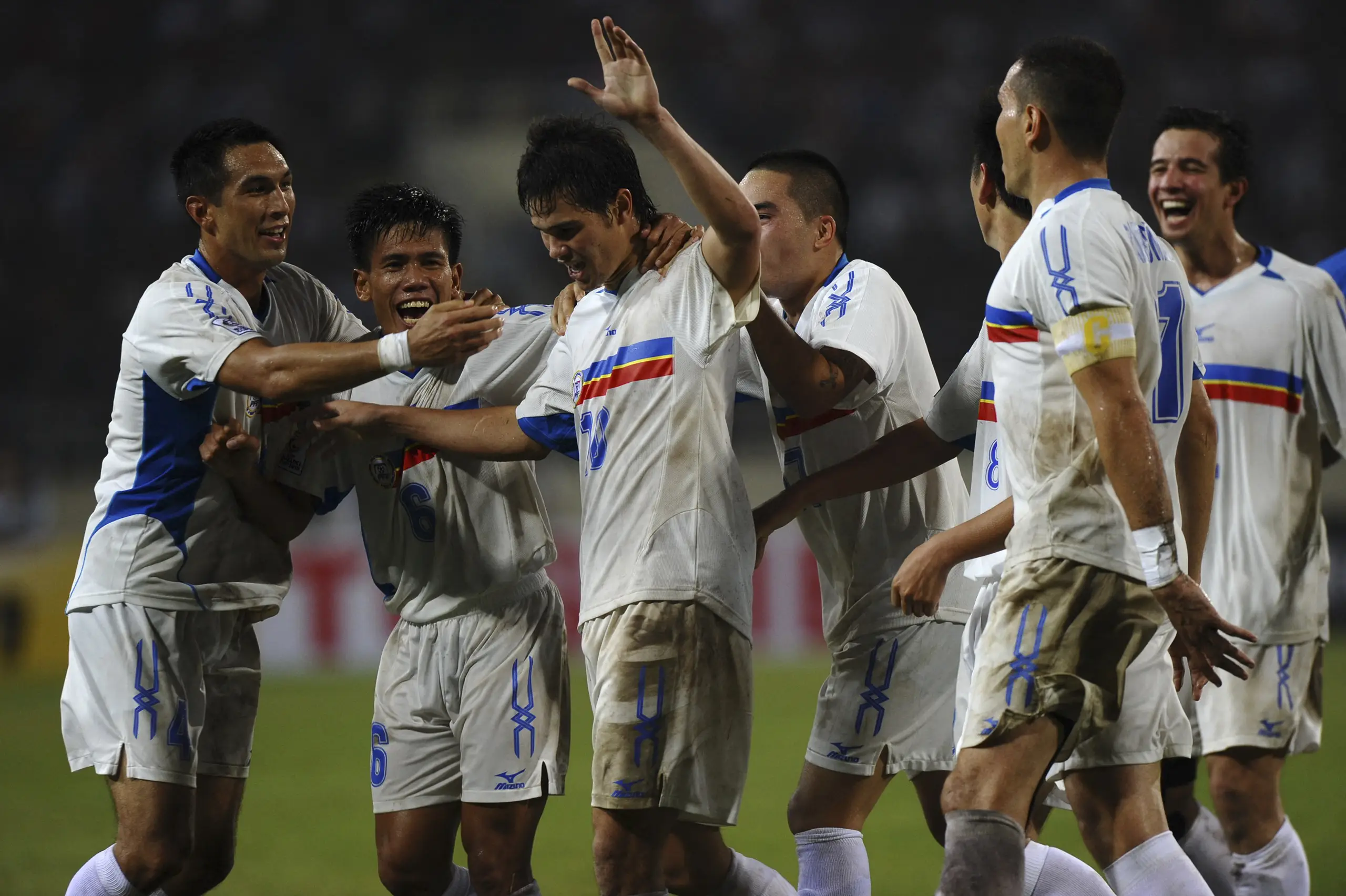
No single match result has had a more profound effect on a single Philippine sport than the Azkals’ stunning 2-nil win over defending champions and regional powerhouses Vietnam in the 2010 AFF Suzuki Cup.
In 2010, football in the Philippines was almost an afterthought. The general public was vaguely aware of the Azkals, the then-moniker of the men’s football team. Even fewer fans took notice of their participation in the Suzuki Cup, the biennial ASEAN football tournament normally dominated by other Southeast Asian countries and where a match against the Philippines was often considered a sure three points.
The Azkals entered their group match against defending champions and hosts Vietnam the very heavy underdogs: not only were their opponents far superior, they also had to deal with over 80,000 rabid fans in the My Dihn Stadium in Hanoi.
When the final whistle blew, the scoreboard read an unbelievable PHI 2, VIE 0. The Azkals had done the impossible. It was a result that sent shockwaves throughout the competition. Back in Manila, the media quickly picked up on the result, and when the team arrived home, they were welcomed liked conquering heroes.
Philippine football was never the same again afterwards. Interest in both team and the sport picked up dramatically, and for a stretch in the 2010s the Azkals routinely made the semifinals of the Suzuki Cup. The legacy of that team is still being felt today. Ask any current national team member, and they’ll tell you their heroes growing up were players like the Younghusbands, Chieffy Caligdong, and Neil Etheridge.
4. Gilas Pilipinas breaks the Curse of Korea (2013)
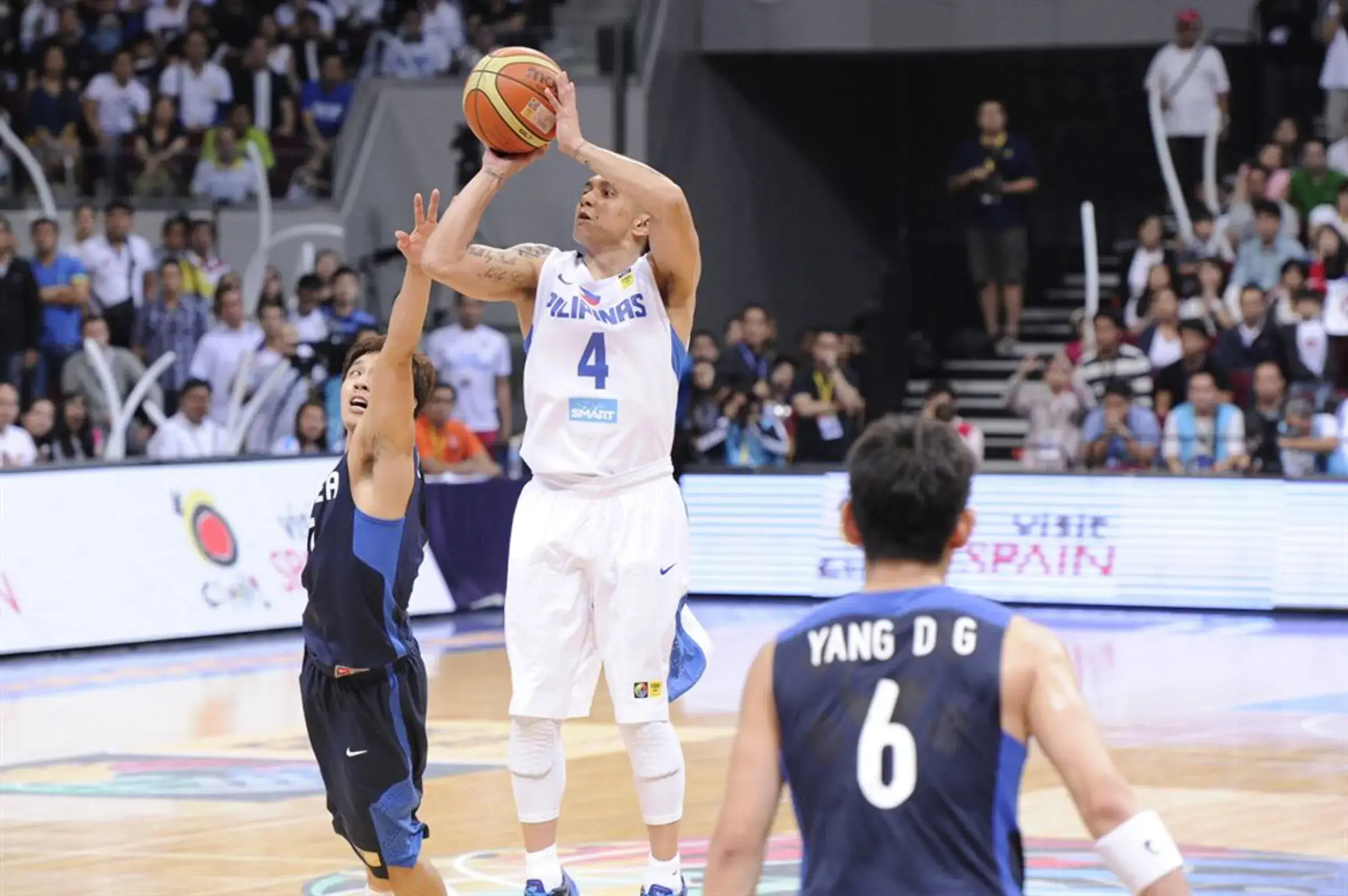
The thing about curses is that the more you believe in them, the more they become a reality in your mind. Prior to 2013, Filipino basketball fans had come to believe that all Philippine basketball teams were doomed to lose to their Korean counterparts.
The list of heartbreaking losses was long and bothersome: 1986 Asian Games, 1994 Asian Games, 2002 Asian Games, 2011 FIBA Asia Championship. We just couldn’t seem to beat these guys.
All that changed on August 10, 2013 in the semifinal of the FIBA Asia Championship. If there ever was a time and place to finally break the curse, this was it. Gilas Pilipinas had the homecourt advantage plus a solid team that had trained together for several months.
Despite all these, the Koreans still had a 73-71 lead late in the game. But this time, the Philippines didn’t fold, and nor were there any last-second daggers from the visitors. Jimmy Alapag, the unspoken leader of this legendary Gilas team, delivered the dagger himself, a triple in the last minute that all but sealed victory and a return to the FIBA World Cup after 36 years.
There wasn’t a single dry eye in the venue after the buzzer sounded. Even in the media room, where emotions and cheering were frowned upon, grizzled sportswriters fought back tears while writing the story of one of the greatest nights in Philippine basketball history.
3. Manny Pacquiao sends Oscar De La Hoya into retirement (2008)
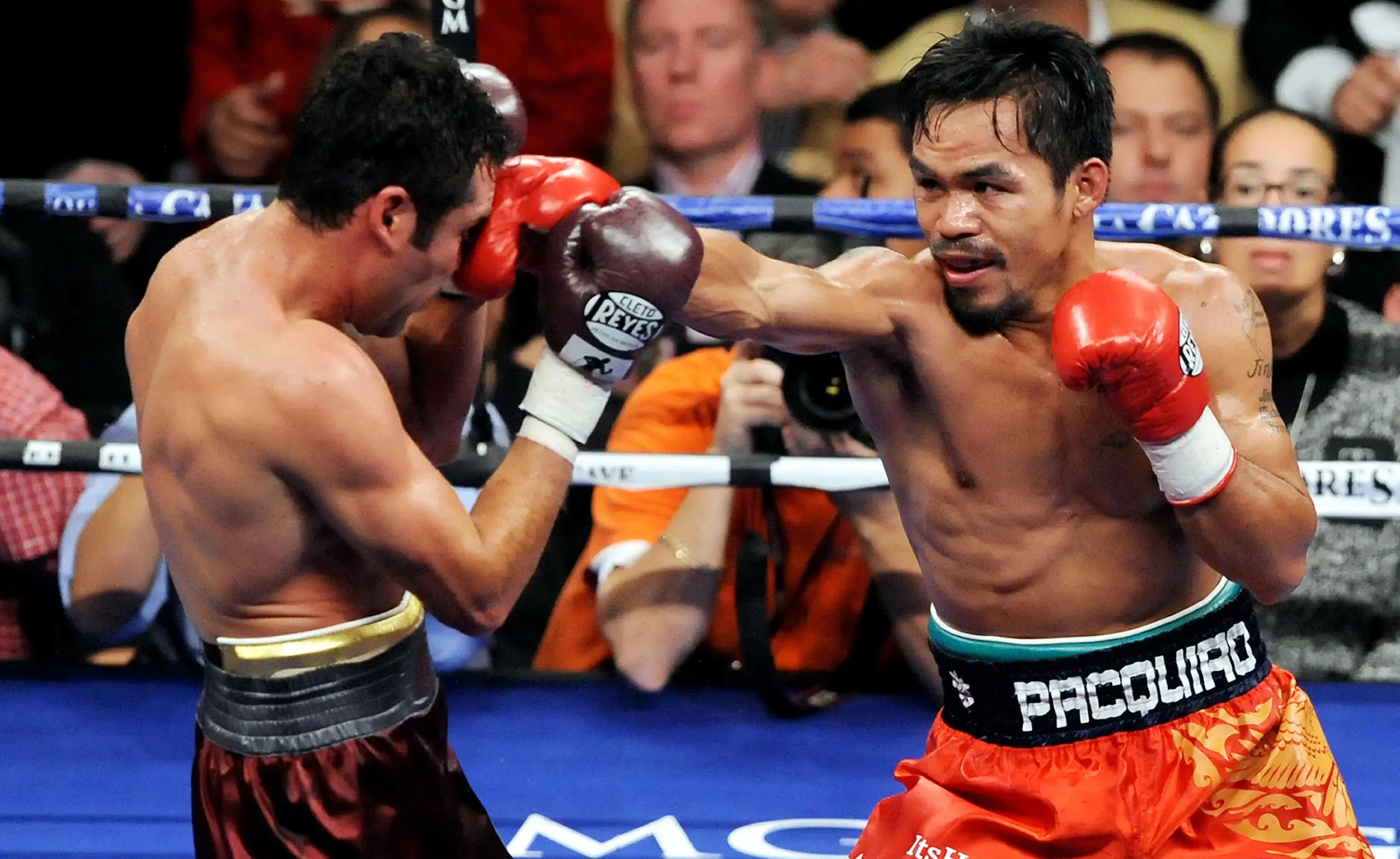
If you could pinpoint the exact moment when Manny Pacquiao metamorphosed from boxing star to global icon, it was on December 8, 2008. On that date, in front of a global audience, Pacquiao battered Oscar De La Hoya, the face of boxing for more than a decade, into submission.
When De La Hoya surrendered on his stool after eight one-sided rounds, Pacquiao became the most famous Filipino in world history. It wasn’t his most devastating performance, nor was a world title on the line, but the sheer magnitude of event elevated him higher than any of his previous bouts. De La Hoya’s own celebrity raised the stakes considerably: he was already a global icon himself when he met Pacquiao. And though The Golden Boy was already past his prime in 2008, the mere size difference between both fighters, plus De La Hoya’s edge in experience, installed him as the heavy favorite.
There was genuine concern from some quarters that Pacquiao was making a huge mistake, so much so that a Filipino congressman even filed a bill seeking to prohibit Manny from pushing through with the fight.
As it turned out, people should have been concerned about De La Hoya, whose left eye was swollen shut at the end of the bout. When it was over, there was a passing of the torch moment when Pacquiao whispered to De La Hoya, “You’re still my idol.” To which Oscar replied, “Now you’re MY idol.”
2. Carlos Yulo wins two Olympic gold medals (2024)
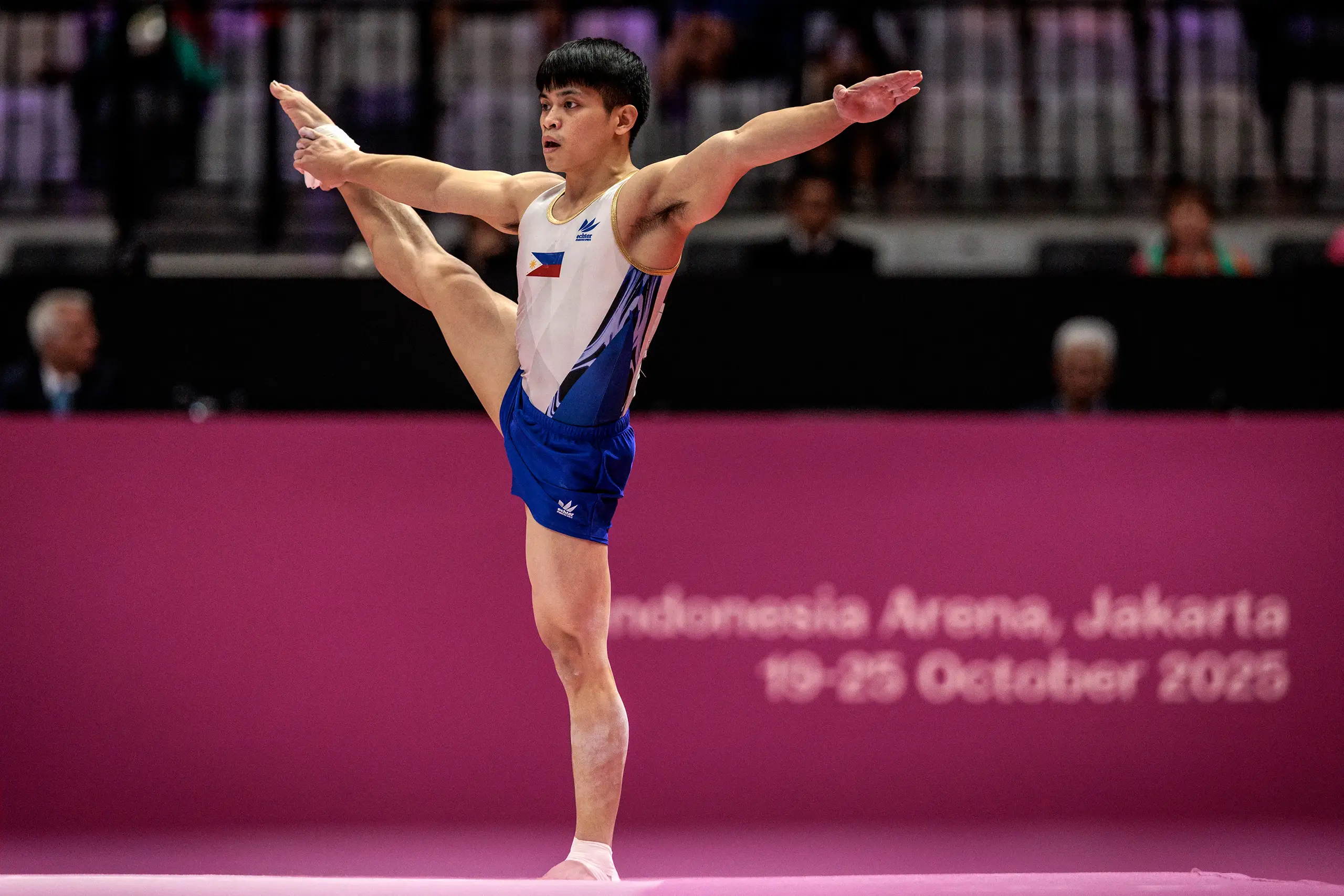
The road to Olympic glory for the Philippines had already been paved by Hidilyn Diaz at the Tokyo Olympics in 2021. Three years later in Paris, Carlos Yulo not only went down that road, he did so twice. In the same Olympics. On back-to-back nights.
The term “good things come in small packages” took on a whole new meaning. Yulo is barely five feet tall with shoes, but at the Paris 2024 Olympics, he stood in rarefied air. He became the first Filipino male to win an Olympic gold after topping the men’s floor exercise. The following night, he became the first Filipino, period, to win two gold medals with a decisive win in the vault.
Yulo returned home to a hero’s welcome and untold riches after the government and the private sector showered him with gifts in both cash and kind that ran into the tens of millions. It’s highly unlikely that his Olympic accomplishments will be duplicated, let alone surpassed, by a fellow Filipino athlete anytime soon.
In fact, the only name that comes to mind who could possibly pull it off at the 2028 Los Angeles Olympics? Carlos Edriel Yulo.
1. Hidilyn Diaz lifts an entire nation (2021)
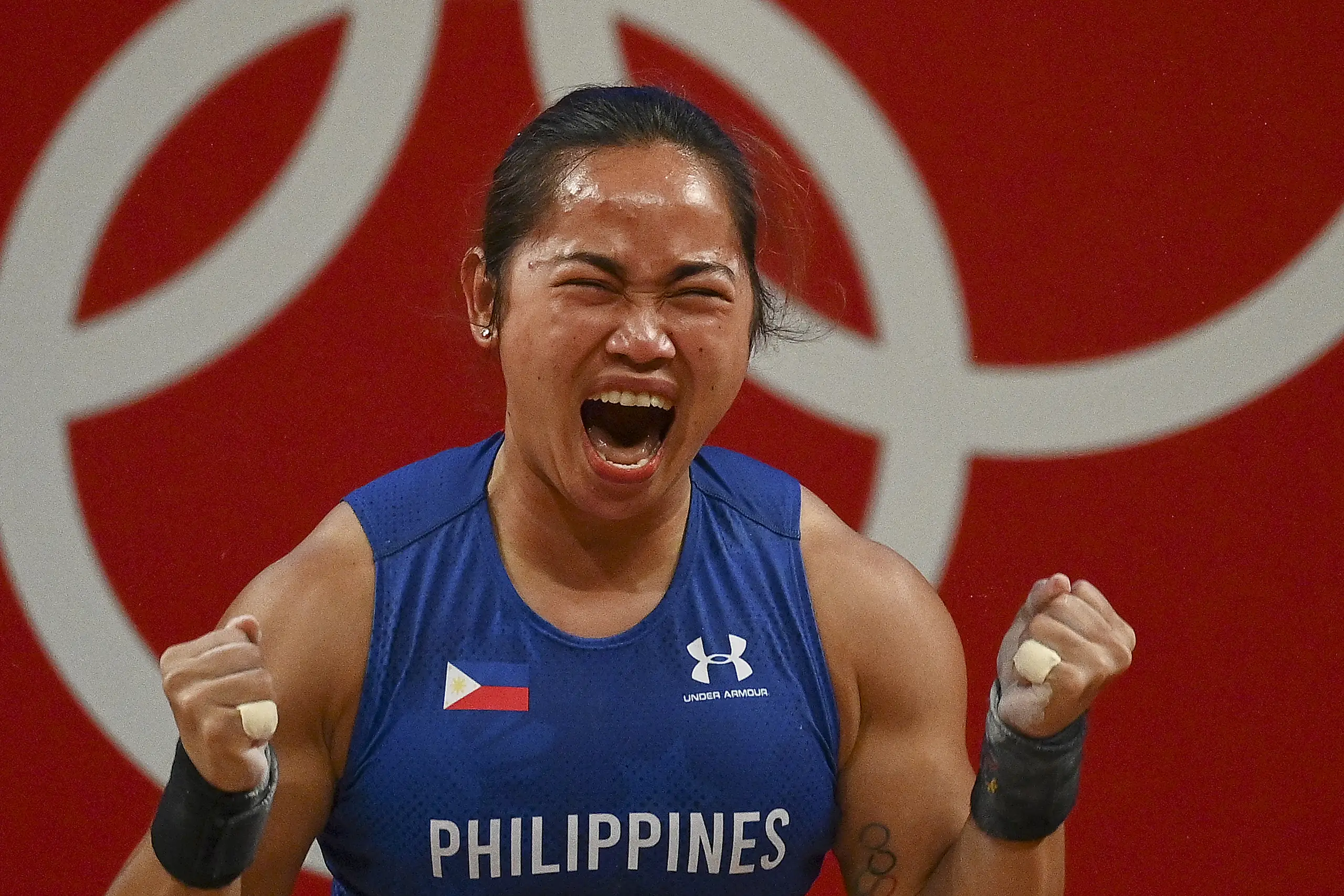
Carlos Yulo may have twice as many gold medals, but the one Hidilyn Diaz won was doubly special, for it showed every Filipino that yes, it can be done. This is why it’s our pick as the top Philippine sports moment in the last 25 years. And as they say, you never forget your first.
Prior to her epic triumph in Tokyo, Diaz had already made history as the first Filipina to win an Olympic medal after she pocketed a silver in Rio in the women’s 59kg weightlifting competition. She quickly set her sights on a higher goal in Tokyo – to be the first Filipino athlete of any gender to strike Olympic gold. It would help that a new weight division that seemed tailor-fit for her – 55kg – would be introduced.
The road to Tokyo, though, was littered with lockdown-related hardships. Diaz was forced to train in Malaysia for over a year using makeshift weightlifting apparatus after she was unable to fly home to the Philippines before the world shut down.
Diaz got off to a strong start in Tokyo, as she and principal rival Liao Qiuyun of China both lifted 97 kg in the snatch competition. It would now all come down to the clean and jerk. Liao lifted 126 kg for a total of 223. Hidilyn had to lift 127.
But as she steadied herself and gradually lifted the barbell above her head, she knew she had done it. She let out a cry for joy before dropping the barbell to the mat, as millions of her countrymen celebrated in their living rooms. Hidilyn Diaz was an Olympic gold medalist, and an entire nation wept for joy as for the first time in Olympic history, Lupang Hinirang was played at the medal ceremony.
Images from AFP and POC
Related Stories