
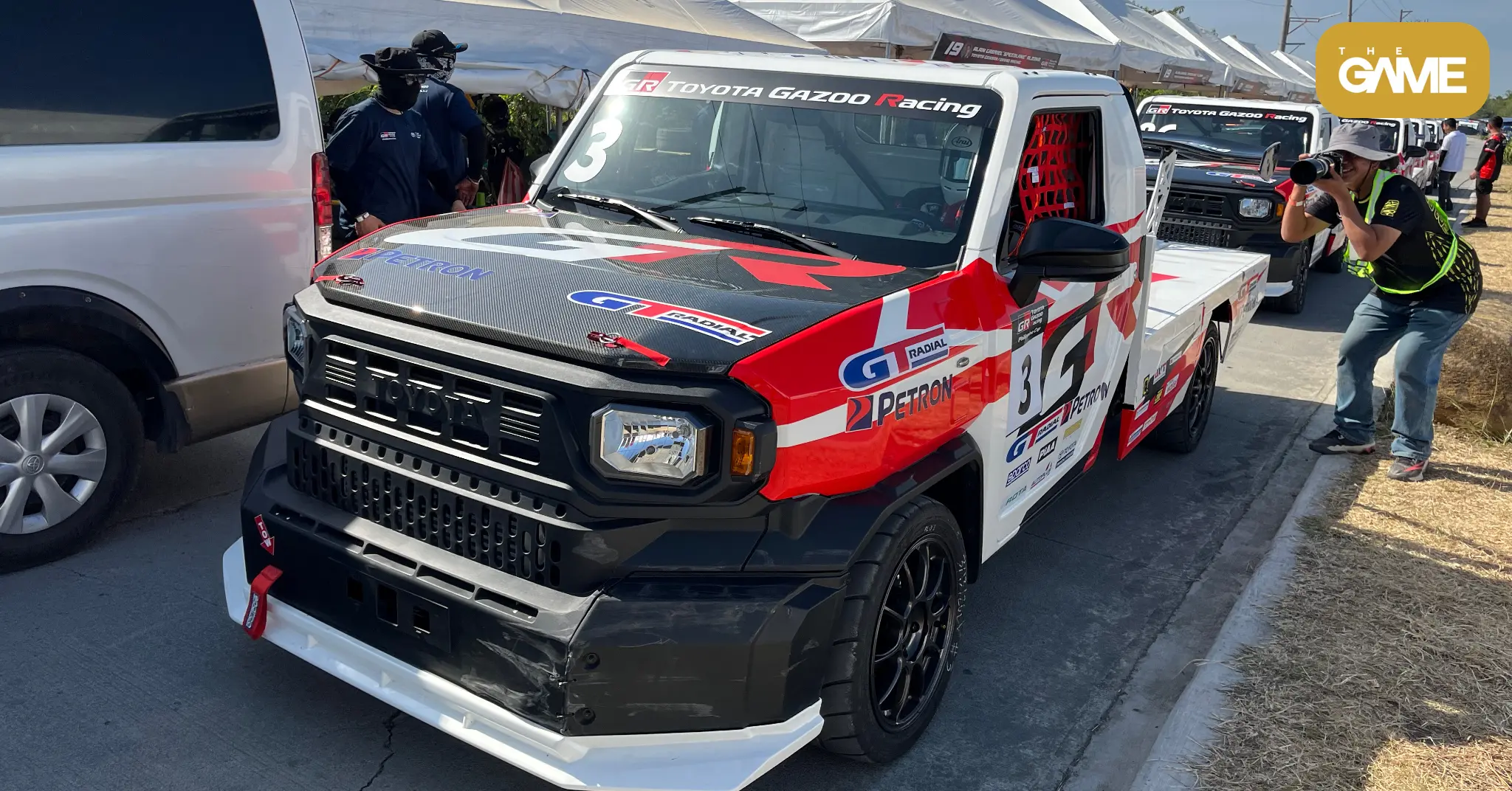
The 2026 Toyota Gazoo Racing Philippine Cup is officially underway, headlined by the entry of the Next-Generation Tamaraw to the race track.
Ask any Filipino on the street about the Toyota Tamaraw, and chances are, they have fond memories of it. That it was their family car at some point, or they rode one for daily commutes before the UV Express took over.
If they do, then it’s more than understandable. After all, the Tamaraw is iconic for its reliability. Even the modern-day version comes in a rugged look that’s perfect for a utility vehicle.
But through the 2026 Toyota Gazoo Racing Philippine Cup, the Tamaraw model is being re-introduced in a different light. More than being a utility vehicle, it’s proving to be a machine that can thrive on the racetrack too.
“Our challenge was that we wanted to be the first one to do this. This is the first execution of this kind of setup for the car across Asia and the world. With our findings, it’s a very good platform, and our development went well,” Pocholo Molina, president of Toyota Gazoo Racing Philippines, told The GAME in an exclusive interview.
First introduced through an exhibition race, the next-generation Tamaraw made its TGR Philippine Cup debut over the weekend at the Riverpark in General Trias, Cavite. For three straight days, the model known for reliability proved its mettle on a street circuit, handling tight corners with ease for 12 straight laps.
Motorsports prodigy Inigo Anton ruled the Tamaraw One Make Race (OMR) class, topping two out of three sprint races, along with the qualifying rounds. Save for a stumble in Race 2, Anton was dominant with the Tamaraw OMR, finishing a full second ahead as he showed off his mastery of the Riverpark circuit.
Despite driving the Tamaraw for the first time, the 21-year-old says the experience felt surprisingly familiar.
“Going into this [weekend], we had no idea how it would perform. But we were amazingly surprised that these cars are fast and can actually drift! These cars are on pace with the Vios Cup cars as well,” Inigo told The GAME.
“It’s so much fun, you know? Having these real-powered trucks. Every time you go to the U-turns, there is a lot of wheel spin, a lot of sliding around. So instead of Tokyo Drift, you could say Tamaraw Drift instead.
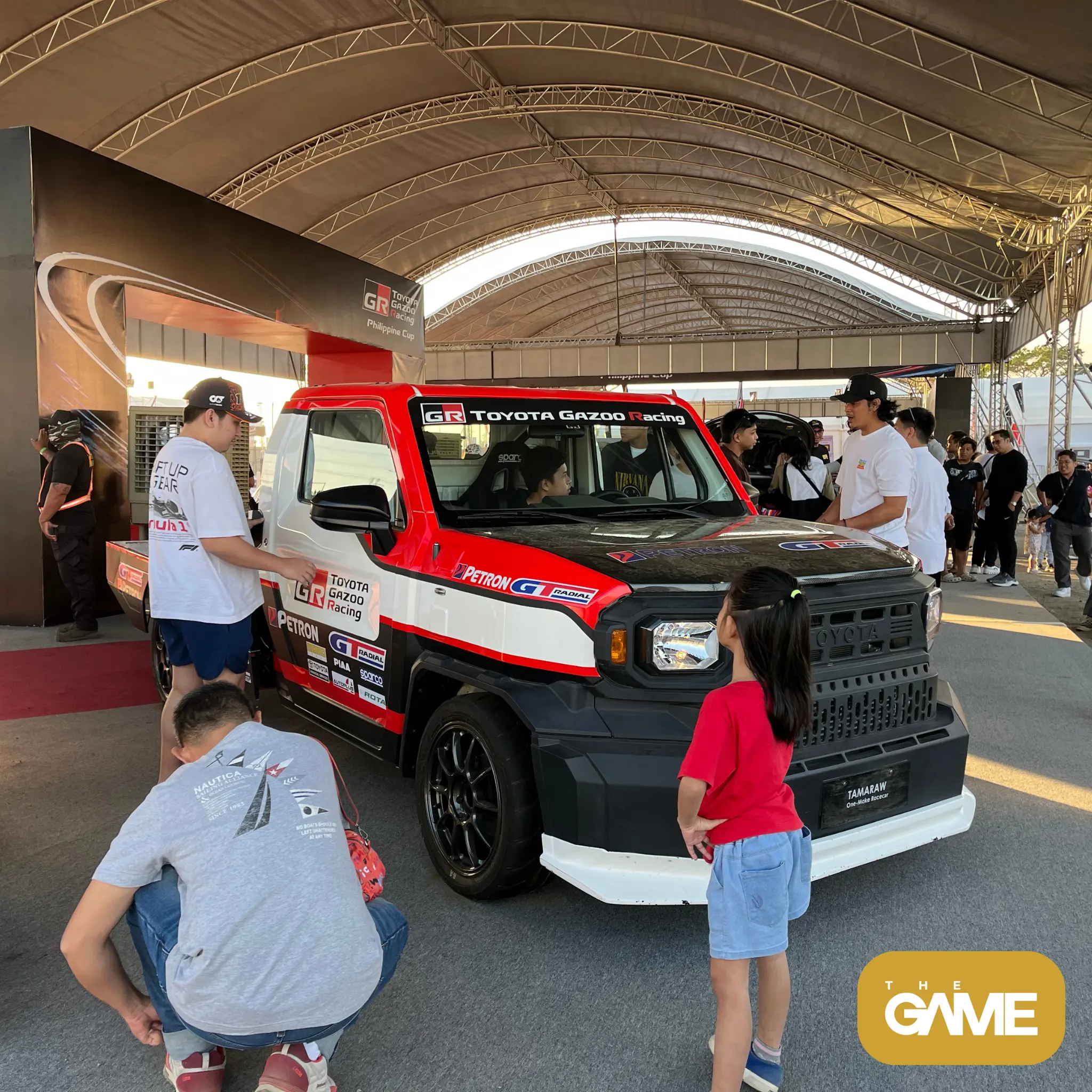
Like Inigo, Toyota Motor Philippines (TMP) president Masando Hashimoto says that the Tamaraw is a treat to drive, as the lack of technological gimmicks requires drivers to lean into their fundamentals.
“The Tamaraw is a trickier car to maneuver than the Vios. It’s body mass exceeds around 1500 kilograms, and it’s heavier compared to the Vios…there is also no [anti-lock braking system], no [vehicle stability control] and traction control, but it has the great advantage of diesel torque and rear-wheel drive,” said Hashimoto.
“[Rear-wheel drive] is the best one, as it comes with drifting, sliding, and a more go-kart feeling. So all the racing skill foundations are in the Tamaraw…it gives more chances to learn how to drive the car, which makes it more fun to race.”
Motorsports for all
Although the next-generation Tamaraw was the highlight, Race Weekend 1 of the TGR Philippine Cup also included long-running competitions featuring the Vios: the Legacy Class, Sporting Class, and Super Sporting Class.
Of course, there were also the crowd-friendly booths, such as a Gran Turismo 7 racing simulator, and an exhibit of the brand’s performance lineup. Members of Toyota-affiliated car clubs were also given the chance to experience the Riverpark street circuit, bringing a mix of old and new models.
Filipino bands Lola Amour and Ben&Ben, meanwhile, capped off a full two days of racing through guest peformances.
“We’re happy with the turnout, with how everybody performed. No major accidents, all cars survived without very heavy damage,” Molina said. “Event-wise, we’re happy with how it turned out, seeing so many people outside really interacting with our displays and activities, so we were very happy with that, and hopefully we can do something like this again.”
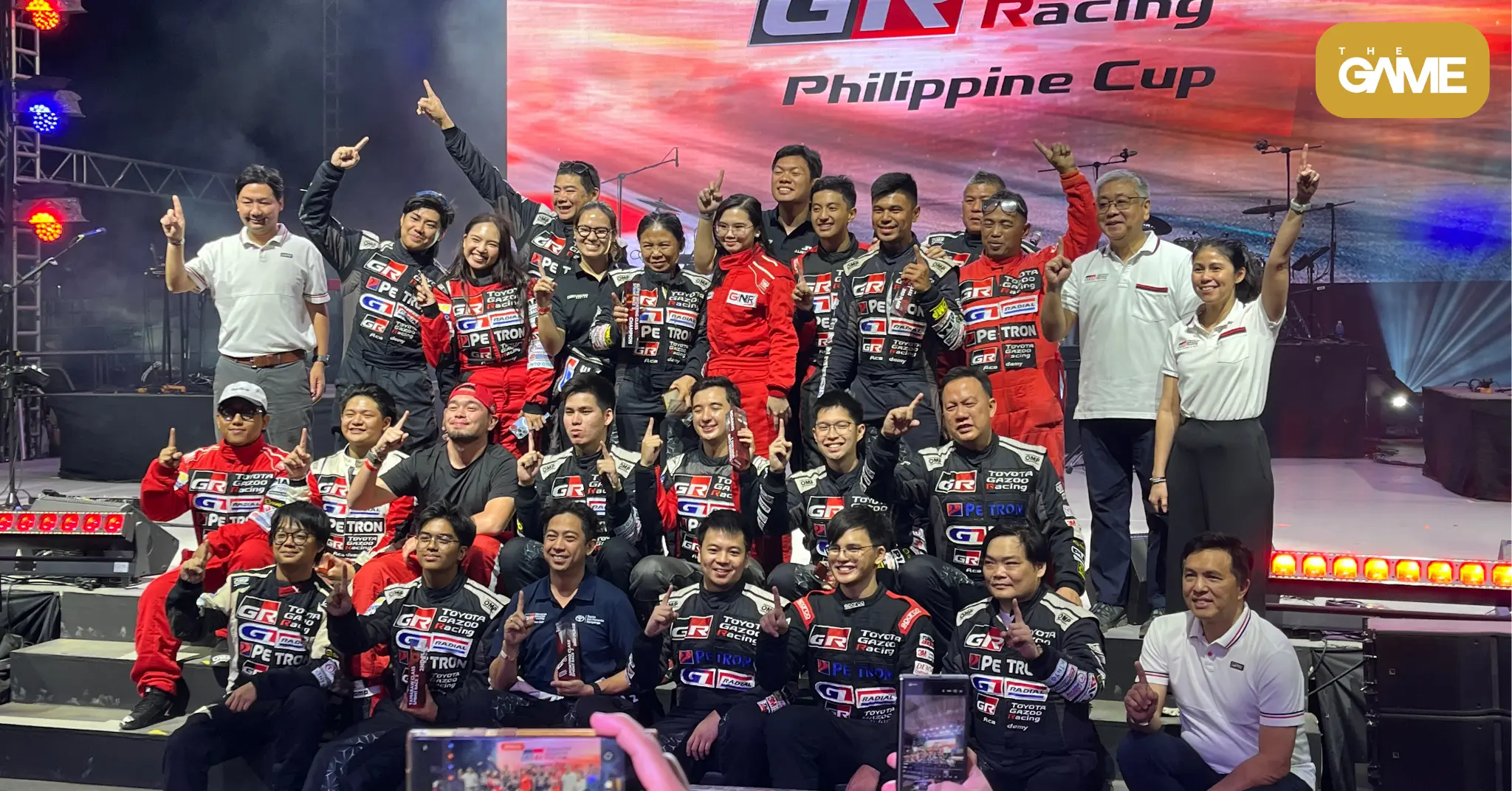
“With the street races, ang pinaka-importante talaga is to bring it closer to the audience unlike when we do it in Clark or in Batangas. Of course, those venues are two to three hours away [from Metro Manila]. This time, bringing it to Imus made it closer to everyone.”
The 2026 Toyota Gazoo Racing Philippine Cup returns this July 9 to 11 at the Clark International Speedway, before moving on to the Batangas Racing Circuit in August, and capping off the season again in Clark by September.
As with Race Weekend 1, the Next-Generation Tamaraw will remain an interesting storyline for the rest of the season. If they were able to perform well on a street circuit, then what more for a proper race track?
Says Inigo, “Definitely it’s going to be a wider track this time, so it makes for a lot more action as well. A lot more overtakes, defensive battles, strategies will be ongoing. So we know with a full grid of 16 Tamaraws, we can’t wait to go back there.”
It’s so nice that we can show a Filipino-made car in the Tamaraw, and that it’s able to compete and race…so hopefully other people will be interested in racing these Tamaraws, or even using these Tamaraws because these Filipino cars can go fast.”
Images by RJ Ballecer.
Frequently Asked Questions
Yes. While historically recognized as a durable, reliable workhorse and utility vehicle in the Philippines, the Tamaraw has been modified and repurposed for various forms of local motorsport, showcasing its versatility and robust engine performance beyond its intended commercial use.
To compete on the track, racers typically strip the interior to reduce weight, upgrade the suspension system for better handling, and modify the engine for higher output. Custom tires and safety equipment, such as roll cages and racing seats, are also essential additions for competitive driving.
The Tamaraw’s reputation for durability and its simple, rear-wheel-drive platform make it an accessible base for automotive enthusiasts. Its parts are widely available and affordable, allowing racers to experiment with performance tuning without the high costs associated with modern, specialized sports cars.
While Toyota Philippines focuses on its modern fleet, the Tamaraw holds a legendary status in the country’s automotive history. Many grassroots racing series and car clubs organize events that pay homage to iconic vehicles like the Tamaraw, fostering a community that keeps the “Tamaraw spirit” alive through track days and time-attack challenges.
The Tamaraw has shifted from being seen solely as a utility vehicle to a cultural icon and a “sleeper” choice for enthusiasts. Seeing one on the track surprises many fans, serving as a nostalgic reminder of its capability and the creativity of Filipino car builders who refuse to relegate this legend to the past.
Related Stories