
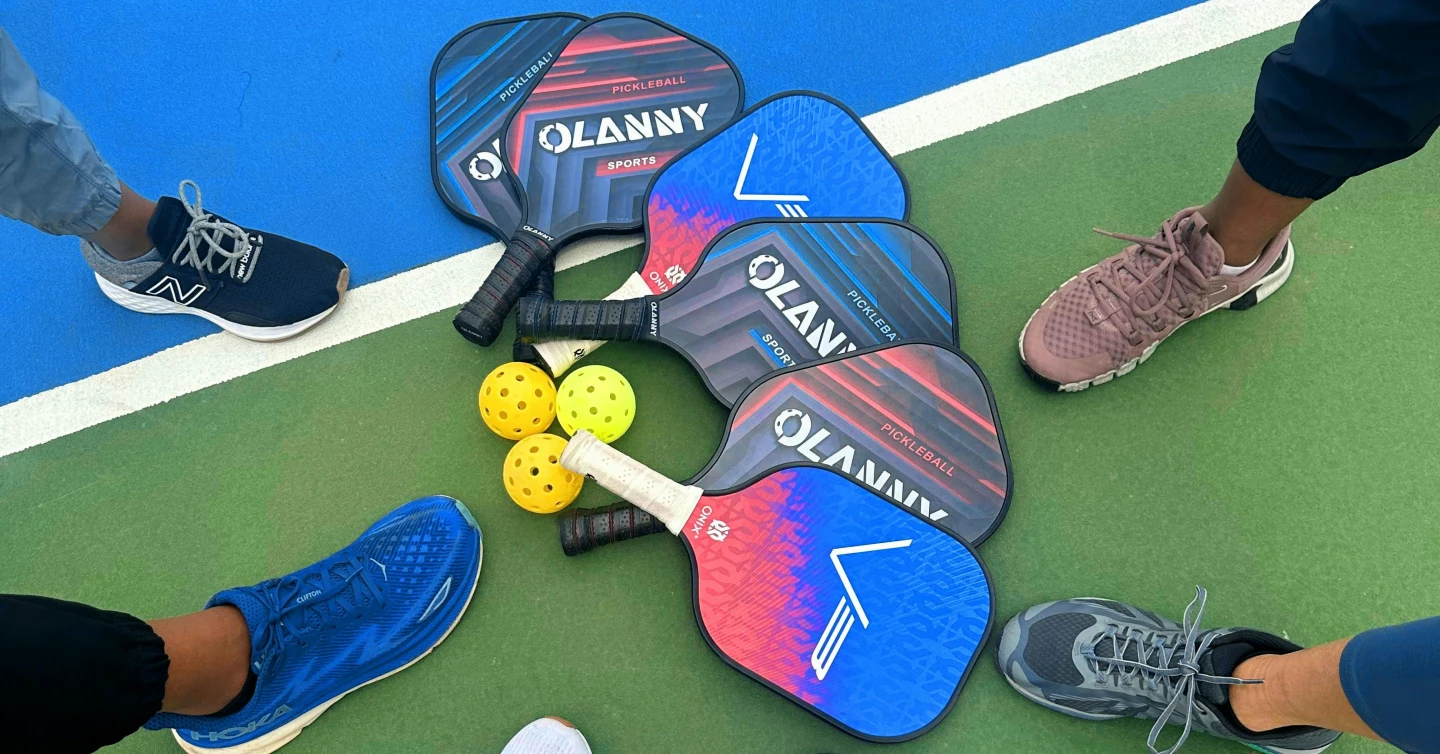
As more and more people buy into the pickleball hype, the debate remains whether it’s a serious sport, or a mere leisure activity.
In the Philippines alone, pickleball has taken the country by storm. Even shopping malls have dedicated courts, and sports retailers now carry essentials like paddles, shoes, and apparel.
Chances are, your friends who played badminton or tennis have brought their talents to pickleball. If they did, then it’s perfectly understandable, given the sport’s social nature, and the low-level barrier to get started.
“Comparing it with other sports kasi, there are lots of techniques na [you have to master]. You need coaching, training sessions na it’s becoming challenging,” Robby Navarrete, a pickleball coach and manager, told The GAME in an exclusive interview.
“Ang difference with pickleball is any age can join. I even have my mother-in-law who is already 69, I told her specifically to retire from work and just play pickleball and eat healthy. So right now, she’s enjoying pickleball almost four to five times a week and even joins tournaments.”
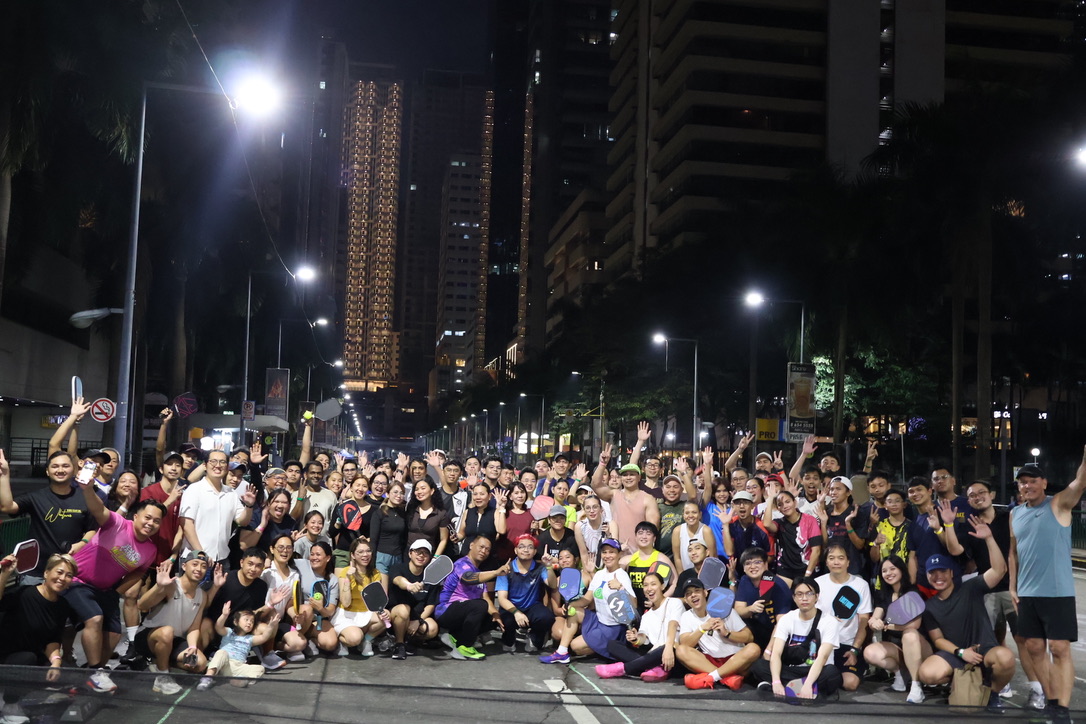
But at the same time, the rise of pickleball can be described as polarizing. On one hand, more and more players are buying into the hype, whether recreational or competitive. Even tennis icon Novak Djokovic described pickleball as a “threat” to his sport thanks to the accessibility factor.
However, there are still those who brush it off as a pastime, or something that’s not a “real” sport. Such criticism has even resulted in controversy, with reports of pickleball nets being vandalized in the United States.
Asked about the matter, Navarrete was rather diplomatic. For him, it’s a matter of respect first and foremost, rather than focusing on a right or wrong answer.
“From the news before, some tennis players tinrash ‘yung nets ng pickleball, kasi nga parang sinasabi nila, they own the court,” he said. “For me, ayun nga, we have to respect ‘yung views ng bawa’t community, na there’s nothing wrong with playing, so don’t put a sport down just because you don’t like it.”
“Kumbaga ako, I play all racket sports; I played table tennis when I was young and varsity ako up until nauso naman ‘yung badminton nung 90s, then I played tennis kasi ‘yung in-laws ko are playing tennis,” added Naverete, who also tried his hand at paddle and beach tennis before discovering pickleball.
Competitive scene thriving
Regardless if it’s a “sport” or “pastime”, the fact is that pickleball can get competitive too. Locally, the Philippine Pickleball Federation already has the National Championships and Amateur Nationals that’s meant to gather the country’s top pickleball stars. A juniors’ tournament is also in the works according to PPF president Shawy Cu.
National tilts aside, the Philippines has also competed in Pickleball Champions League (PCL) Asia. Pickle Yard, a local group, recently held their inaugural Pickle Yard Conference League (PYCL) featuring franchise teams and a draft system. The Games and Amusements Board (GAB) has also recognized pickleball as a professional sport.
Navarrete himself is passionate about the competitive scene, knowing that the Philippines has what it takes to thrive at an international level. A huge example of this, he said, is Clarice Patrimonio, who has won gold in tournaments like the World Pickleball Championship.
“However, there is really a gap between athletes and tournaments. The gap is in between sponsorships, na if we see the potential, we hope that companies, institutions, or the local government would support initiatives in growing the sport,” Navarrete, who manages Patrimonio, said.
“Kasi sa nakikita ko nga rin, we have the capacity to compete. We have the potential to compete internationally,” Navarrete added, with stars like Leander Lazaro and Sarah Jane Lim also making waves internationally.
As a silver lining, Navarete pointed out the rise of tournaments supported by local government units (LGU), such as the Tabontabon Pickleball Tournament in Leyte, and the Himaya Pickleball Tournament held in Himamaylan, Negros Occidental.
“Dumadami na rin ‘yung supported by local governments, na malaki rin ‘yung cash prize and ‘yun nga, to sustain the sport, there’s really money in and money out. So dapat magkaroon talaga ng ecosystem na it’s a win-win for everyone,” he said.
Pickleball, Navarrete said, isn’t easy as it looks either. As with any racquet sport, it also includes a “mental game”, where players need to make decisions on the fly during rallies.
“Maganda with pickleball, it’s a 10-15 minute game and it could be intense. Pickleball, sinasabi nila ‘Ah, it’s too easy’. But for me, it depends on who your opponent is,” said Navarrete.
“Actually, there is a study nga rin na pickleball singles is harder than tennis, and that’s the reason why the rallies are faster. In tennis, the court is big, the bounce is different na you can wait for the ball, then ang singles ng tennis can last up to four hours.”
According to Navarete, even Patrimonio struggled in her transition to pickleball, given that the sport requires more finesse than power.
“Si Clarice, she’s a hard-hitter, but onti-onti we practiced, we had drills on playing the soft game that makes pickleball different from tennis because of the non-volley zone…that makes it fun kasi para siyang nagiging chess match na it’s not just about power. It’s about controlling the pace.”
Like Navarrete, PPF chairman Mike Johnson believes that Filipinos can also thrive in competitive pickleball. For him, the rise of bigger venues like Tela Park in Las Piñas, or the upcoming Helios Pickleball Center in Pasig can allow for more tournaments to be staged locally.
“Those big venues are just now coming online, whereas other places like Vietnam have already had facilities for a while. They got ahead of us a little bit, but the Philippines is not far behind,” Johnson told The GAME in a separate interview.
“And Filipinos are going to be very successful in pickleball. There’s no natural barrier for Pinoys to be very successful in pickleball. You win through your strategies and tactics.”
Olympic sport
So is pickleball really a sport, or just a leisure activity disguised as one? Pressed about the matter, Navarrete admits that it’s meant to be a competitive sport. Only in his view, not all players will pick up the paddle with the intention to take it seriously.
“Actually, it’s really a competitive sport. You just can’t force anyone to see it that way. Kasi in pickleball, there are recreational players where they just want to have fun, socialize, exercise, but they don’t want to compete,” Navarrete said.
“They don’t want to join tournaments, kasi pag pumasok na ang tournament, nandiyan ‘yung pressure or competition, sometimes nawawala ‘yung fun. So ‘yun nga ‘yung task rin ng bawat isa, na it has to be balanced. Parang pag naging too competitive, nawawala ‘yung fun part of it.”
Ultimately, it all boils down to knowing why someone played pickleball, or any sport, in the first place.
“What’s your goal? ‘Yun ‘yung for me, mas importante. What’s your goal of trying this sport or staying in this sport or moving forward with this sport?”
Johnson, meanwhile, strongly agrees about pickleball being a legitimate sport, citing the Global Pickleball Federation’s (GPF) plans to include it as a demonstration event in the 2032 Brisbane Olympics.
Unlike skateboarding and breakdancing in Paris, though, Johnson says that the GPF is targeting pickleball to become a standalone sport in the Summer Games.
“We don’t want pickleball to go to the Olympics under tennis. That’s not what we want, [even if] people are thinking that’s the way to get there faster. But I can tell you that the sentiment within the global federation level, that’s not what we want,” Johnson said.
“Pickleball is a standalone sport. We don’t need to be under tennis or anybody, so we’re pursuing our Olympic aspirations directly and not through tennis.”
Ultimately, how pickleball is viewed will depend on the player. As Navarrete mentioned, there are some who play it recreationally and that’s completely valid. It’s the same for players who use pickleball as an outlet for their competitive genes, even those who once played tennis, badminton, and other traditional racquet sports.
But regardless of one’s perception, there’s no denying that pickleball has established its place as a mainstream activity both locally and internationally.
Banner images from Danita White on Pexels.
Frequently Asked Questions
According to pickleball coach Robby Navarrete and PPF chairman Mike Johnson, yes. Navarrete says pickleball involves real technique and coaching, while the Games and Amusements Board (GAB) has officially recognized it as a professional sport.
The Philippine Pickleball Federation runs a National Championship and Amateur Nationals, with a juniors’ tournament also in development. The Philippines has also competed in Pickleball Champions League Asia, and local group Pickle Yard launched its own franchise-based conference league.
The Global Pickleball Federation is aiming to include pickleball as a demonstration event at the 2032 Brisbane Olympics. PPF chairman Mike Johnson said the federation wants pickleball to enter as a standalone sport rather than a category under tennis.
Clarice Patrimonio is a Filipino pickleball player managed by coach Robby Navarrete who won gold at the World Pickleball Championship. Navarrete said her transition to pickleball required shifting from a hard-hitting playstyle to a more finesse-based approach.
Critics often point to pickleball’s social, low-barrier nature and its popularity among casual and older players as reasons to view it as leisure rather than serious competition. The rivalry has even led to incidents like pickleball nets being vandalized by tennis players in the United States.
Related Stories