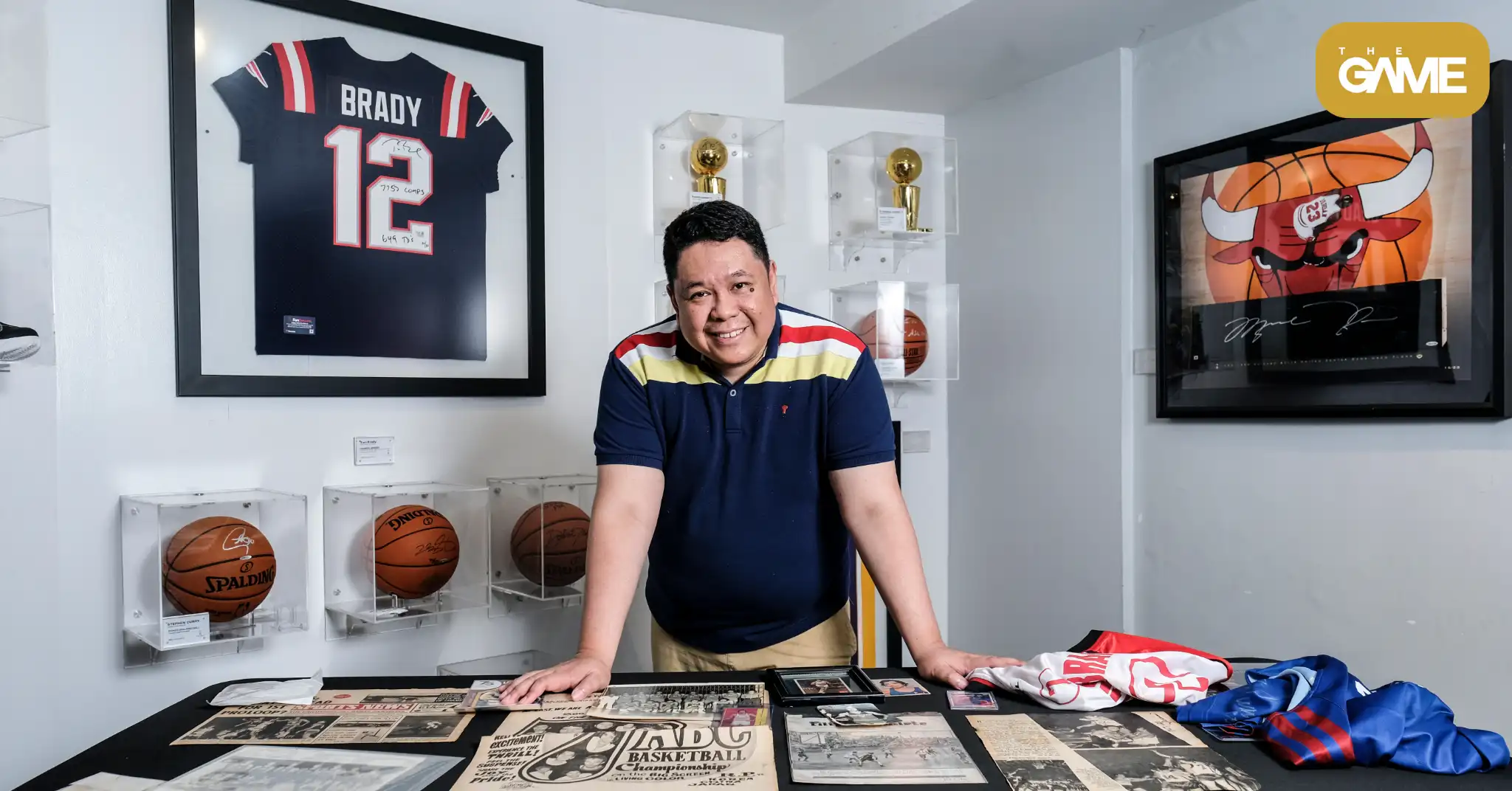
There are sports fans, and then there’s Dr. Michael Rico Mesina, who has turned his passion for Philippine basketball into a magnificent collection of memorabilia.
For close to four decades now, the Reyes Gym in Mandaluyong has hosted different varieties of basketball activity — from weekend warriors getting in a good sweat to PBA teams practicing for their next game.
The gym, situated on the second floor of a three-story building, had a spectators’ area back in the 1990s that allowed fans to watch their favorite PBA teams practice.
A young kid who lived nearby named Michael Rico Mesina was one of the regular spectators. His uncles, all diehard PBA fans, would bring him to watch different PBA teams practice. It was an experience that left a lasting impression on him.
“Actually, I can still remember the schedules,” Mesina, now with a “Dr.” attached to his full name, told The GAME in an exclusive interview. “12nn to 2pm is Purefoods. 2pm to 4pm is Alaska. And then 4pm to 6pm is Pepsi Mega. My titos, they point to me the legends that were in the court at that time. ‘Michael, ito si [Johnny] Abarrientos. Ito si [Alvin] Patrimonio.’”
There were many 80s and 90s kids who grew up idolizing those names, but for Dr. Rico Mesina, the curiosity sparked something much deeper that grew into what is now a fulltime hobby and passion. He wanted to learn more about these hardcourt heroes, so he gathered as much information as he could find in the pre-Internet era.
“I went to the most reliable source of information back then,” he said. “So I started collecting basketball magazines.”
Fast forward to 2026, and Mesina has collected much, much more than just local basketball magazines.
He holds up an old black-and-white photograph of a basketball team, but not just any basketball team.
“So one of my top five is this one,” he says. “This is a picture of the 1954 Asian Games basketball team champions. And then most of this team went on to Rio de Janeiro later that year and won third place in the World Basketball Championship. Anchoring the team was of course The Big Difference, Caloy Loyzaga. And what makes this unique for me is that there’s an autograph of Caloy here.”
Imagine you’re an avid fan of rock music, and you have in your possession an early photograph of The Rolling Stones with Mick Jagger’s signature at the bottom. This is the Philippine basketball equivalent of that.
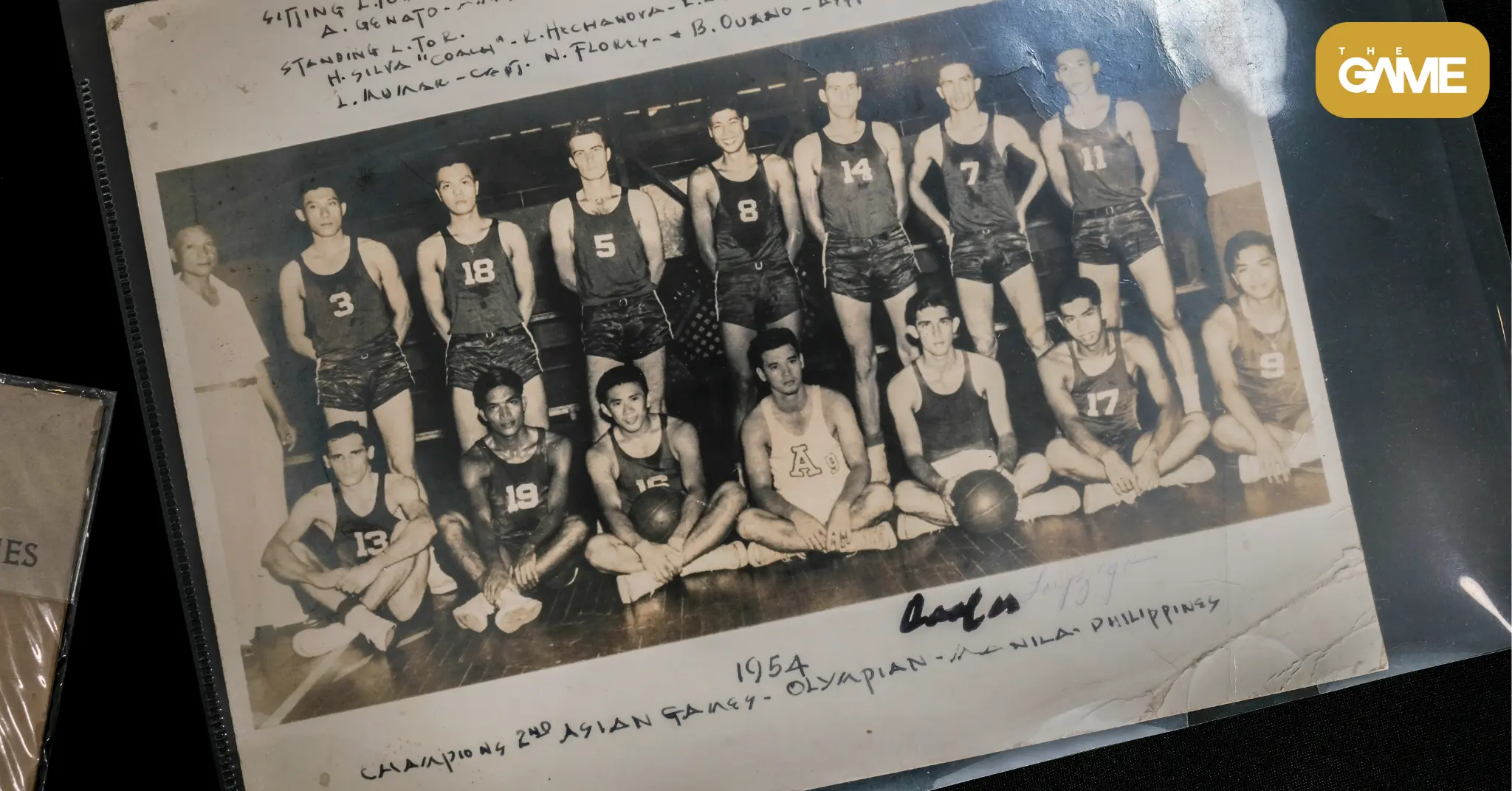
The photograph is part of Dr. Mesina’s impressive collection of basketball memorabilia, which has steadily grown in both size and value over the last few years and dates back well over a hundred years.
There’s a photograph of the basketball competition at the 1936 Berlin Olympics, the first time basketball was played in the Olympics, showing the Philippine team playing against Uruguay on an outdoor court. Also from those Olympics is a sealed manifest of passengers onboard the French ship D’Artagnan, which ferried the Philippine delegation from Berlin back to Manila.
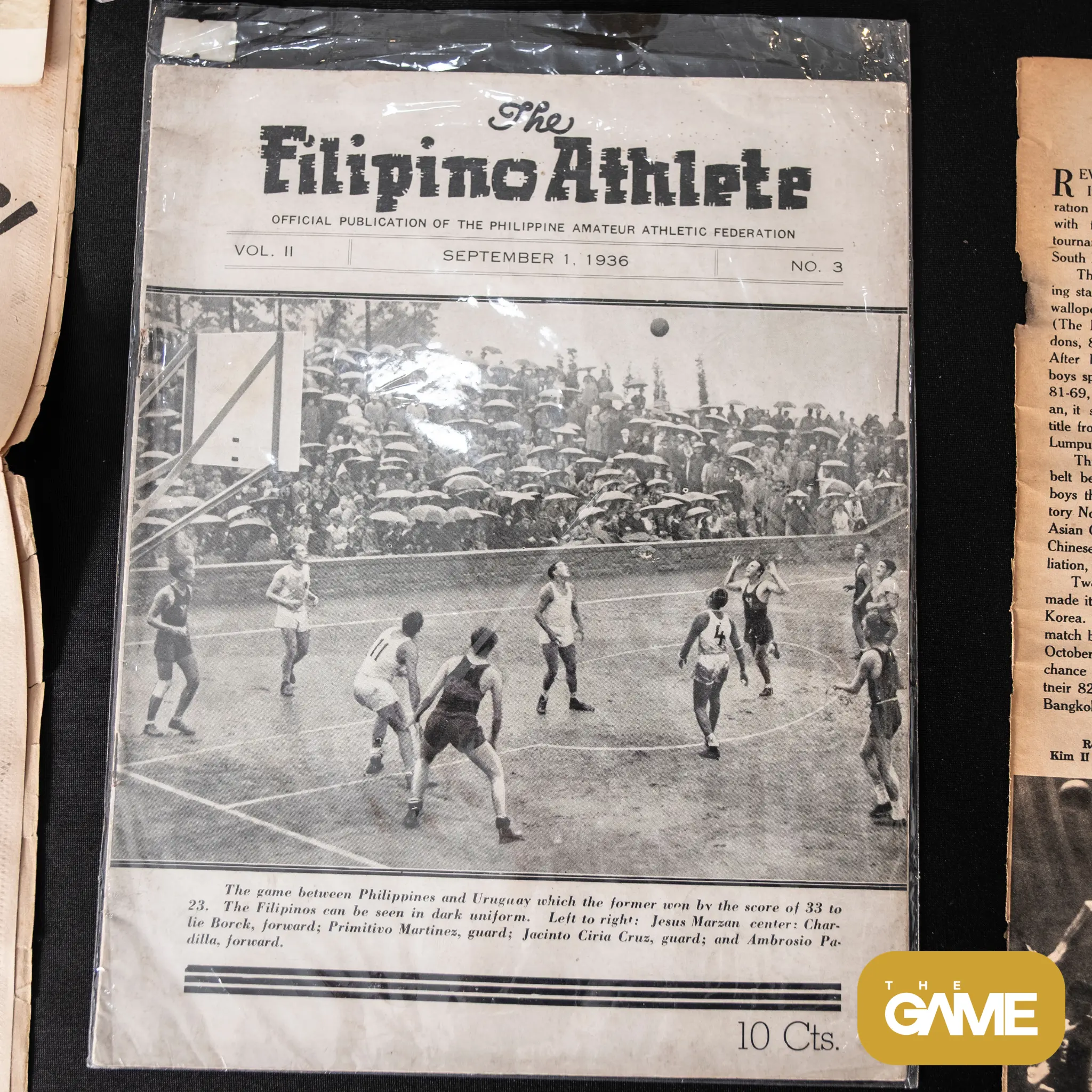
There are newspaper clippings from 1973 announcing the 7th Asian Basketball Confederation Basketball Championship won by the Philippines at the Rizal Coliseum, the last time a full homegrown Philippine team was tops in Asia. Then there’s an Upper Box ticket from November 2, 1975, the very first PBA season.
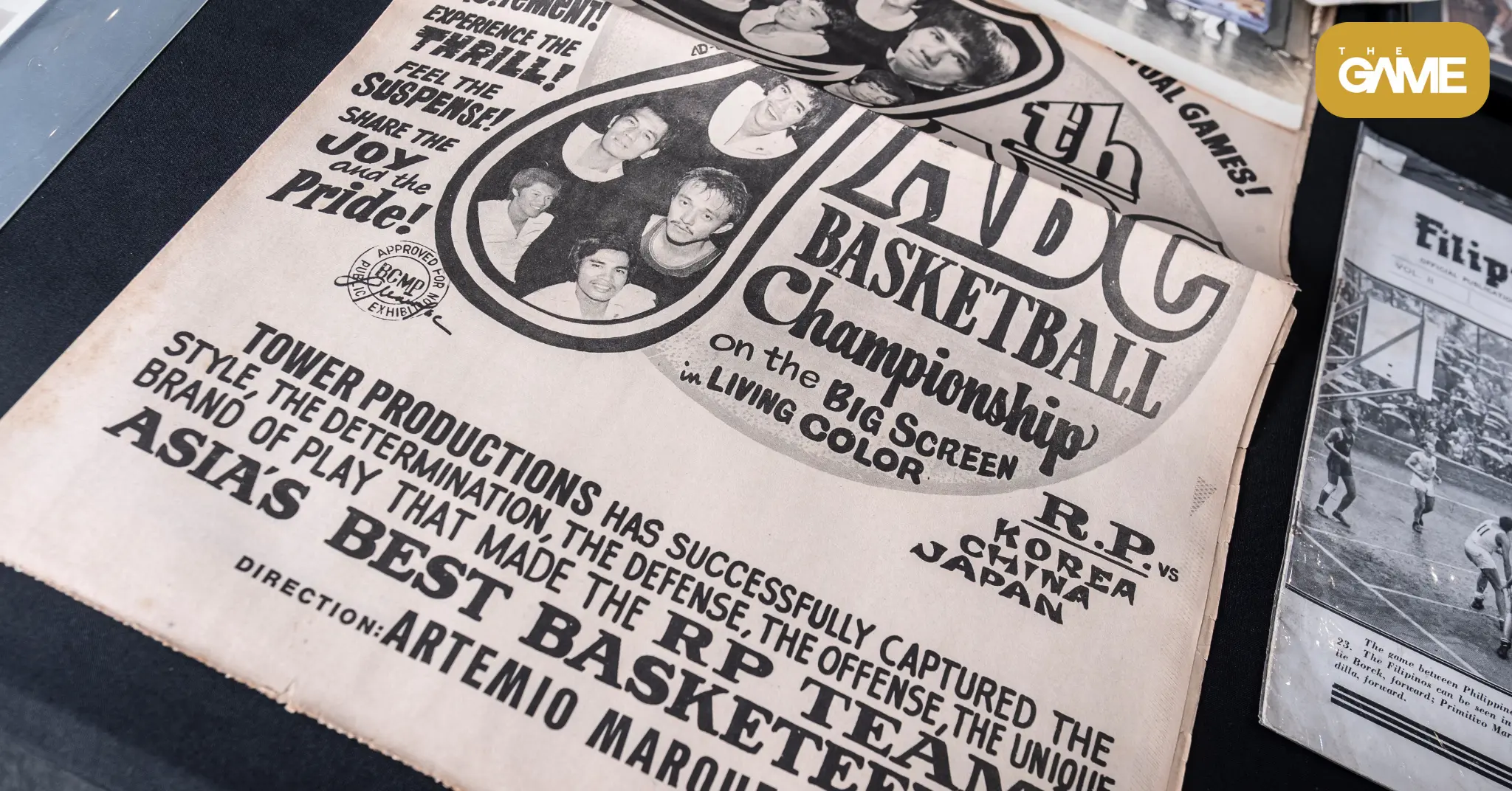
It started at the onset of the pandemic, when the world shut down and left everyone with nothing to do. Left with time on his hands for the first time in a long time, Mesina thought of indulging in his fascination with Philippine basketball.
“So I was thinking, what is the passion project that I can do in my free time? And do things that I was not able to do because I was so busy in my work as a doctor.”
(For context, Dr. Mesina is a radiologist, and wasn’t a medical frontliner during the lockdown.)
His original magazines were misplaced while his family was moving into a home, so that’s what he targeted.
“So out of nostalgia, what I did first was to buy again those magazines that I had when I was a kid,” he explained. “From there, when I already had a significant amount of magazines bought, I wanted more of a challenge.”
Mesina started scouring social media for harder-to-find items. Soon he connected with other well-known collectors, who pointed him in the right direction. Before he knew it, the good doctor had become, in his words, “the go-to guy for collecting Philippine basketball memorabilia.”
Now, it’s the collectors who approach him.
“I get random messages every day, actually,” he said. “’Doc Mico, ito, gusto mo ba ito? Interesado ka ba dito?’”
Buyer beware
Like in any buy-and-sell business, unscrupulous individuals abound in the memorabilia field. Dr. Mesina admits that he has been victimized by fake items in the past. The experience made him all-the-wiser, and he now has his own eye tests to weed out the bad eggs.
For example, if the item is a game-worn jersey, he prefers if the player himself offers it up.
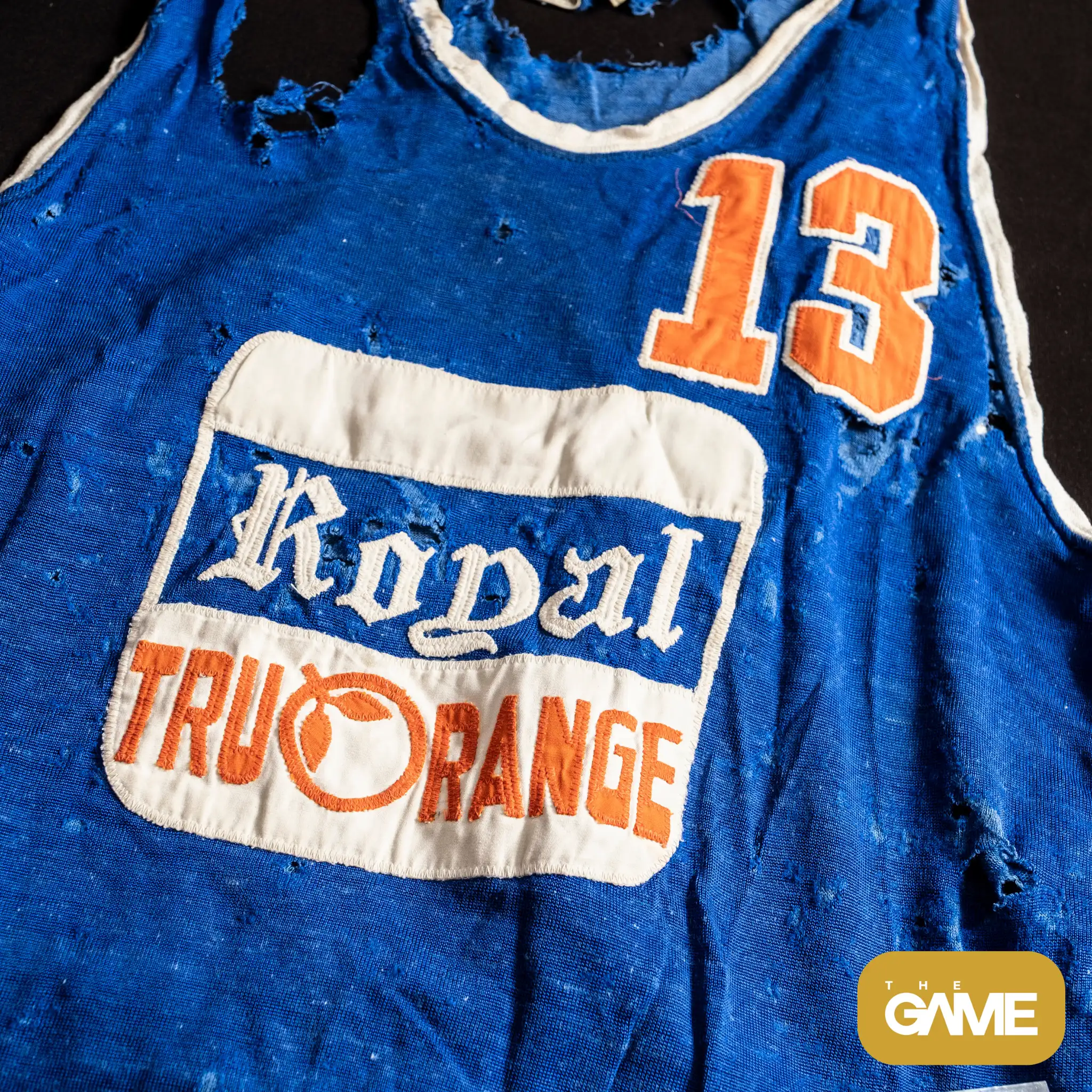
“This one, this Manny Paner jersey, sir Manny Paner gave it personally to me, and I have documentation,” he said, pointing to an old, tattered and torn Royal Tru Orange jersey from the inaugural season of the PBA.
“Number two, I try to check if there is documentation of the item. For example, if they try to sell like a June Mar Fajardo jersey to me, I ask them if they have a picture of June Mar giving the jersey to the seller or to the person, and also if there is picture proof or video proof.”
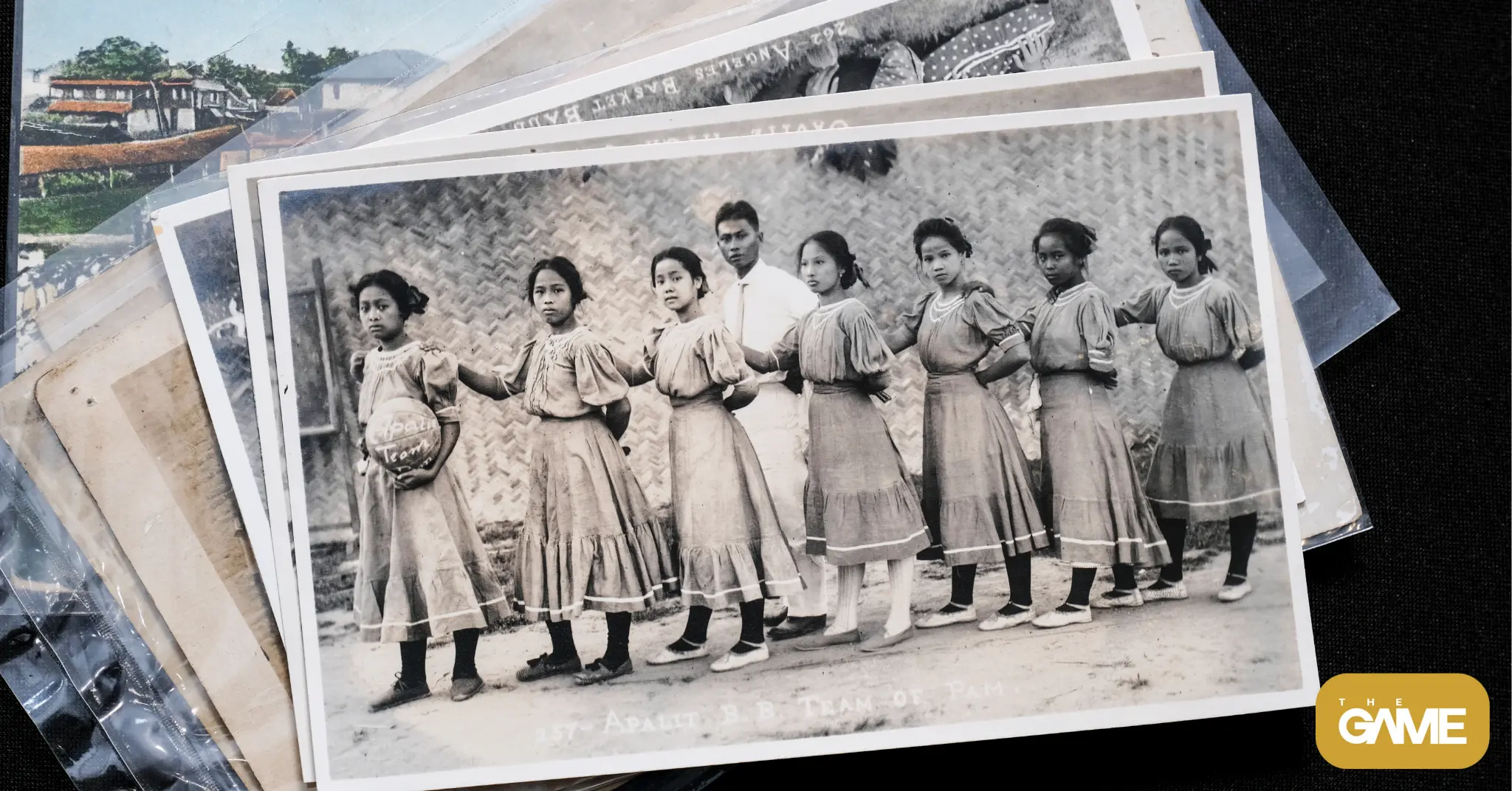
He then shows a set of old postcards showing a photo of a group of young Filipinas (basketball was initially played by girls in the Philippines).
“So now, first I see the wear and tear, although it’s in good quality, you can see that the printing is from the early 1900s. Kasi here it’s not yet Philippine Republic. I look for those particular clues and see if they correlate with the time period of that particular item.”
Dr. Mesina has also developed a list of red flags.
First sir, if the price is too low. Because if it’s too low, either he doesn’t know that his item is expensive, or he’s scum.
“Then the referrals are also important, and getting the vouch from the other collectors. So for example, a collector approached me, he’s a seller, I don’t know him, we don’t have common friends, so I asked my network of fellow collectors, if they know this particular guy.
“So if people would vouch for him, that he’s a legit seller or collector, so I would continue my conversation with that particular person. But if no one can vouch, or they told me, ‘Look, stay away from that person, one-sided usually ang transactions, so I’ve been warned, that I should be careful with that particular person.”
The Holy Grail
All of his items are truly impressive, but if you ask Dr. Mesina to name his most prized possession, it’s something that was worn by Superman. The Black Superman, to be precise.
“It cost me 50,000 pesos. Grosby, Billy Ray Bates shoes. So that’s one of the most expensive items that I had to pay for.”
Grosby was a popular local shoe brand in the 1980s, which later morphed into Kaypee. Mesina’s next target is one such pair.
“So it’s also what we call the Kaypee Futura, the one endorsed by Alvin Patrimonio and Ramon Fernandez. One of the copies of that is in the collection of Big Boy Cheng, the green one. And there’s the less common red one. So I talked with a collector already who’s willing to sell me the red one, the rarer KP Futura shoe for around 50,000 to 60,000 pesos as well.”
That’s a pretty tidy sum for a pair of shoes, which brings us to the obvious question: Just how much as Dr. Mesina spent on his collection?
“So far, thank God, it hasn’t reached 100,000 pesos per item. But if you put them all together, for sure, I’ve spent seven figures for the collection.”
There is that one item, though, that represents his white whale, his albatross, his unicorn. Or, as he refers to it, his Holy Grail.
“A game-worn jersey from the Far Eastern Games. So from 1913 to 1934, the Philippines won nine out of 10 of those tournaments. So I think that would be my Holy Grail.”
Mesina has reason to believe one such jersey still exists.
“I have a friend collector who has one jersey, I think from the 1934 Far Eastern Games. But it was not worn by a player. The jersey that he has was worn by the team mascot. So back then, the team mascot was like a kid or a young person who wears the actual jersey. So it’s not a mascot that looks like a cartoon. So it’s an actual kid that wears a jersey. That’s the jersey which is owned by my friend collector.”
Unfortunately for him, the jersey is not for sale “as of now.”
There is actually another reason why Dr. Mesina does what he does. He was at the PBA office in Libis one day, when he asked Commissioner Willie Marcial if the league had a museum to house its memorabilia.
“Bluntly, he said no. So I was a bit disappointed, because why is it like that? The PBA is an established league, second oldest league in Asia, and there’s no brick and mortar museum to boast of.
“Whereas in other countries like NBA, and then the Naismith (Basketball Hall of Fame) in Springfield, we have institutions like that. I also asked the SBP, ‘Do you have memorabilia from the 1910s, 1930s’? They said no.
“So that’s when it occurred to me that if I can be the instrument to bring them together and make them available for our basketball fans, so I think that can be a good legacy that I can leave as a basketball fan and as a basketball enthusiast. So as a collector, meron po kasing tinatawag na gatekeeper, yan parang hindi kayo pwede pumasok, kami lang dito. But me, I think of myself a steward.”
“So imbis na ini-inhibit ko yung tao na makita yung collection, I want them to see it so that they can be inspired and then be more informed about the deep and rich basketball history that we have in our country.”
Images by Ed Simon/KLIQ, Inc.
Frequently Asked Questions
Dr. Michael Rico Mesina is a radiologist and Philippine basketball memorabilia collector based in Mandaluyong. His collection spans over a century of history, including photographs, jerseys, tickets, and newspaper clippings tracing the PBA and earlier Philippine basketball eras.
He looks for documentation such as photo or video proof of an item changing hands, prefers items given directly by the players themselves, and examines physical details like wear, printing style, and era-specific markers to confirm authenticity.
Dr. Mesina’s most expensive item is a pair of Grosby Billy Ray Bates shoes, which cost him 50,000 pesos. His self-described “Holy Grail,” however, is an authentic game-worn jersey from the Far Eastern Games (1913–1934), which he does not yet own.
No, PBA Commissioner Willie Marcial confirmed to Dr. Mesina that the league does not have a dedicated museum, despite being the second-oldest basketball league in Asia. This gap inspired Mesina’s goal of eventually making his collection publicly accessible.
Dr. Mesina began collecting seriously at the onset of the pandemic, initially repurchasing basketball magazines he owned as a child before expanding into rarer items like jerseys, photographs, and historical documents through social media and fellow collectors.
Related Stories